Tools to Automate Content Creation and Posting
November 24 , 2025
Business owners invest heavily in marketing infrastructure – subscribing to writing tools, design platforms, scheduling software, and analytics dashboards. Yet despite these investments, content teams report feeling more overwhelmed than ever. The contradiction is stark: more tools should mean more efficiency, yet most organizations are experiencing the opposite.
This paradox reveals something counterintuitive about modern content operations. The problem isn’t a lack of tools. It’s what happens between them.
How Content Fragmentation Manifests in Your Daily Operations
The challenges content teams face aren’t abstract. They’re concrete, measurable obstacles that show up every single day:
- Monday morning meetings spiral into chaos when team members realize last week’s content calendar exists in three different spreadsheets, each with conflicting information about what actually posted and what didn’t
- Designers spend 40% of their week hunting for assets, brand guidelines, and approval status instead of actually designing – bouncing between Slack threads, emails, and project management tools
- Writing workflows get stuck in approval purgatory where a blog post sits in someone’s inbox for five days while team members ping each other, wondering if the piece was ever actually reviewed
- Analytics insights never reach decision-makers on time because data lives scattered across Buffer, Google Analytics, Facebook Insights, and LinkedIn Analytics, forcing someone to manually compile reports every Friday
- Content ideas stall because brainstorming requires too much coordination across people working with incomplete information about what competitors are doing, what trends are emerging, and what’s already scheduled
- Brand voice consistency deteriorates when different team members use different tools and each one defaults to slightly different tone, messaging, or formatting standards
- Seasonal campaigns and time-sensitive opportunities get abandoned because the planning-to-execution timeline is too compressed when everything requires manual handoffs between departments
- New platform expansion gets blocked because adding Instagram, TikTok, or LinkedIn to the content mix means fundamentally reorganizing workflows that are already stretched thin
- Team morale declines steadily as marketing professionals spend their days managing logistics and tool-switching rather than doing strategic work that feels meaningful
- Scaling becomes impossible without proportional headcount increases because every additional piece of content requires the same manual labor – writing, design review, scheduling, monitoring, that got you here in the first place
Why This Keeps Happening (Even When Teams Try to Fix It)
Most organizations assume the problem is one of the following: their team lacks productivity discipline, they haven’t found the “right” tool yet, or they need to hire more people.
All wrong.
The actual root cause? Teams are optimizing individual tools instead of optimizing the system connecting those tools.
Here’s what happens: A business owner discovers Jasper for AI writing and sees immediate results, faster draft creation. Great. Then they find Canva for design and celebrate again. Then they add Hootsuite for scheduling. Each tool genuinely improves one specific part of the workflow.
But collectively, these tools create a chain-link system where output from one tool must be manually transferred to the next. Your writer finishes content in Jasper. Someone copies it. Pastes it into Canva. The designer exports an image. Someone else uploads it to Hootsuite. Another person schedules it. Then finally, someone checks the analytics in a separate dashboard.
That’s five manual handoffs for one piece of content.
Common solutions make this worse, not better. Adding more scheduling tools just means more places to log into. Hiring more junior writers to keep up with volume means training them on your fragmented system. Investing in better project management software just adds another tab everyone needs to check.
The real problem isn’t the individual tools. It’s the absence of a unified workflow where creation, design, scheduling, and analytics flow as one integrated system.
The 10 Core Obstacles and What Actually Solves Them
1. Writer’s Block Becomes an Efficiency Crisis
The Challenge: Teams stare at blank pages or struggle to generate ideas that align with brand voice, wasting hours on initial drafts that get rejected anyway.
Why Standard Solutions Fail: Generic writing templates don’t understand your industry, audience, or brand tone. They produce mass-market copy that needs complete rewrites.
The Real Solution: AI writing platforms that learn your brand voice and store it as a reusable foundation – not just generate random content. Jasper specifically allows teams to input brand guidelines once, then every generated piece automatically reflects your tone, terminology, and messaging standards.
2. Design Becomes a Bottleneck
The Challenge: Graphic design is gatekept by people with Photoshop skills. A simple social media post requires either learning complex software or waiting days for a designer’s availability.
Why Standard Solutions Fail: Generic design tools still require design sensibility. Pre-built templates look generic and don’t match brand identity.
The Real Solution: AI-powered design platforms that generate on-brand visuals from text descriptions. Canva’s Magic Design and Adobe Express’s generative features create professional graphics in minutes while respecting your brand color palette and guidelines – no design experience required.
3. Video Content Feels Impossible
The Challenge: Video dominates social feeds and drives 10x more engagement than static posts, yet teams skip video entirely because producing it takes days of shooting, editing, and rendering.
Why Standard Solutions Fail: Hiring videographers or agencies is expensive and slow. DIY video tools still require shooting footage and basic editing skills.
The Real Solution: AI video generation transforms existing content into professional videos automatically. Synthesia and Lumen5 convert blog posts or scripts into polished videos with AI avatars and voiceovers in 2-3 hours, not weeks.
4. Multi-Platform Distribution Gets Manual
The Challenge: Posting to each platform individually takes hours. Teams forget which platforms have been updated. Content timing gets inconsistent.
Why Standard Solutions Fail: Basic schedulers only queue posts at specific times – they don’t optimize for when your audience is actually active on each platform.
The Real Solution: Integrated scheduling platforms that understand platform-specific best practices and post across all channels simultaneously. Sprout Social automatically adjusts posting times based on historical engagement data for each channel.
5. Collaboration Breaks Down Across Departments
The Challenge: Approval workflows scatter across email, Slack, and comment threads. Designers don’t know if copy is final. Writers don’t know if their work has been reviewed. Content sits in limbo.
Why Standard Solutions Fail: Separate approval tools create more friction, not less. Everyone has to check yet another platform.
The Real Solution: Integrated dashboards where creators, reviewers, and schedulers collaborate in the same environment. Hootsuite’s collaborative calendar lets multiple team members create, edit, approve, and schedule without leaving the platform.
6. Analytics Insights Stay Fragmented
The Challenge: Performance data lives in five different platforms. Someone spends Friday afternoon manually compiling reports. Insights arrive too late to inform Monday’s decisions.
Why Standard Solutions Fail: Generic analytics dashboards import data inconsistently or don’t connect all your platforms, leaving information gaps.
The Real Solution: Unified analytics platforms that pull real-time data from all your channels into one searchable dashboard. Sprout Social centralizes metrics from Instagram, Facebook, Twitter, LinkedIn, and YouTube, showing which content types actually drive conversions.
7. Brand Voice Drifts Across Channels
The Challenge: Different team members create content on different platforms using different tools, and no single voice emerges. Your LinkedIn posts sound different from your Instagram captions. Audience confusion grows.
Why Standard Solutions Fail: Style guides exist but aren’t enforced during creation. People follow them inconsistently.
The Real Solution: AI writing tools that encode your brand voice into the generation system itself. Once trained on your best-performing content, platforms like Jasper and Copy.ai automatically match your tone in every output, from tweets to email subject lines to landing page copy.
8. Trend Opportunities Pass By Unchanged
The Challenge: A trending topic could generate massive engagement, but by the time it gets through your normal approval processes, the moment has passed.
Why Standard Solutions Fail: Manual processes take too long. By the time content is approved and scheduled, the trend is yesterday’s news.
The Real Solution: AI-first platforms designed for speed. Predis.ai generates multiple social variations from one prompt in minutes, then posts immediately, perfect for capitalizing on trending topics before competitors do.
9. Scaling Content Without Scaling Team Size Seems Impossible
The Challenge: Adding new platforms or increasing content volume proportionally increases labor requirements. You need more writers. More designers. More schedulers.
Why Standard Solutions Fail: Hiring more people just expands the existing fragmented workflow. They make the same manual handoffs, just in larger numbers.
The Real Solution: AI agents that automate multi-step workflows end-to-end. Instead of people moving content between tools, autonomous programs handle entire pipelines, monitoring industry news, drafting posts, creating visuals, scheduling across channels, and analyzing performance, all without human intervention.
10. Cross-Functional Visibility Becomes Impossible
The Challenge: Marketing leaders can’t see what content is planned, what’s been posted, what’s performing, and what needs attention – all in one place. They ask for status updates constantly.
Why Standard Solutions Fail: Checking each tool individually makes no sense. Some tools don’t integrate with others.
The Real Solution: Centralized dashboards that show the complete content lifecycle. Sprout Social and Hootsuite provide 360-degree visibility into planned content, live performance, and audience engagement – from strategy to execution to measurement.
The One System That Changes Everything
Here’s what separates thriving content teams from overwhelmed ones: They stopped viewing content creation, design, and distribution as separate problems requiring separate solutions.
Instead, they built a unified pipeline.
Think about manufacturing. You don’t have a factory where employees manually carry products between departments. You use a conveyor belt system. Each station specializes in one task, but information and materials flow continuously without friction.
Content operations need the same architecture.
The winning approach: Select one integrated ecosystem where AI creation tools, design platforms, scheduling systems, and analytics dashboards actually communicate with each other – not as disconnected apps, but as one unified workflow.
This doesn’t mean using only one vendor for everything (though some platforms do offer integrated suites). It means deliberately choosing tools designed to connect – tools with APIs that work together, dashboards that feed data into each other, and systems that reduce manual handoffs.
When you do this, something remarkable happens: the constraint shifts. Your team stops being constrained by time (they’re not spending 70% of hours on logistics). They stop being constrained by creative capacity (AI handles generation). They become constrained only by strategic thinking – deciding what stories matter, which audiences to prioritize, and how to measure business impact.
That’s when real growth happens.
The Concrete Benefits of Operating This Way
Your team reclaims 15-20 hours weekly. That’s like hiring another full-time employee, except they work for $0. Those hours shift from “manually moving files around” to “strategy, analysis, and creative thinking.”
Content volume increases dramatically without proportional effort. One product announcement becomes a blog post, five LinkedIn variations, three Instagram carousel variations, two email templates, and a video – all generated automatically from a single source document. Output quintuples while labor stays flat.
Posting remains consistent regardless of circumstances. Vacations don’t cause content gaps. Sick days don’t disrupt schedules. Emergencies don’t derail your calendar. Once your workflow is automated, it runs on its own.
Response times to opportunities compress from days to hours. See a trending topic? Generate variations and post within 30 minutes, not after three approval meetings.
Your analytics actually inform decisions instead of confirm them. Real-time dashboards show what’s working while campaigns are running, not in Friday afternoon reports. You pivot mid-week instead of waiting until next month.
Team members want to work on your team again. Removing the administrative grind means people spend time on work that feels strategic and valuable. Turnover drops. Morale improves. Actual talent stays.
You scale predictably. Adding a new platform or expanding to new markets doesn’t require proportional hiring. Your automated systems scale with configuration changes, not headcount changes.
Your brand becomes omnipresent. Consistent daily posting across all platforms builds audience familiarity and trust. You’re the brand people think of first because you’re always there with relevant content.
Competitive advantage emerges. While competitors are still debating which tool to buy, you’re operating with systems competitors haven’t built yet. Content quality improves. Speed accelerates. Results compound.
You hit revenue goals with fewer resources. Marketing stops being a cost center consuming budget. It becomes a revenue engine that’s actually measurable and scalable.
The Tools That Make This Pipeline Possible
Content Creation: AI Writing & Design
1. Jasper
Jasper specializes in maintaining consistent brand voice across all content types. Upload your brand guidelines once, then Jasper generates blog posts, social captions, email sequences, and ad copy that all sound authentically like your business. Real example: marketing teams using Jasper report reducing blog post creation time from 4 hours to 45 minutes per post – an 82% reduction.
2. Copy.ai
Copy.ai is built for rapid-fire social content. Template-based generation means less setup time. Teams can generate, preview, and schedule social variations in one session instead of fragmenting the work across multiple tools.
3. Writesonic
Writesonic combines AI writing with SEO optimization, so every article ranks better by default. The platform connects ideation through publishing, reducing the number of tools needed for long-form content creation.
4. Canva
Canva democratizes design with AI features that understand context. Describe what you want, and Magic Design creates on-brand graphics. This means designers focus on strategy while the AI handles production, and non-designers can create professional work without training.
5. Adobe Express
Adobe Express brings Adobe’s professional-grade power into an accessible interface. The generative AI creates graphics and videos that maintain brand consistency, so work quality stays high even when scaled across team members.
6. Synthesia and Lumen5
Synthesia and Lumen5 multiply content reach by converting your best-performing blog posts into shareable videos. One article becomes a video you can distribute across YouTube, LinkedIn, TikTok, and Instagram. Estimated ROI: one blog post generates 5-7x more engagement when it also exists as a video.
Content Posting & Scheduling
1. Buffer
Buffer is ideal for small teams or solo entrepreneurs just starting automation. Simple interface, affordable pricing, and reliable scheduling with basic analytics.
2. Hootsuite
Hootsuite enterprise-grade platform designed for teams where collaboration matters. Bulk scheduling means uploading dozens of pieces at once instead of one by one. Advanced analytics show performance across platforms. Social listening alerts notify teams of brand mentions in real-time.
3. Sprout Social
Sprout Social combines scheduling, content assistance, analytics, and customer engagement in one dashboard. Teams can see the entire content lifecycle from planning through performance measurement – no tab switching required. Advanced analytics reveal which content types drive conversions, not just engagement.
4. Later
Later dominates visual platforms. Its Instagram and TikTok-specific design means scheduling these platforms feels natural, not forced. Drag-and-drop calendars beat list-based interfaces for visual planning.
5. Predis.ai
Predis.ai represents a new category: AI-first content creation that feeds directly into scheduling. Generate variations from a single prompt, preview them, and schedule all variations across platforms without leaving the interface.
Advanced Automation: AI Agents
For teams ready to automate entire workflows rather than individual tasks, AI agents unlock a new level of efficiency.
Agent Development Frameworks (LangChain, LlamaIndex, AutoGen by Microsoft) let technical teams build custom agents that execute multi-step tasks autonomously. LangChain specifically enables developers to connect AI models to data sources and APIs, creating agents that research topics, draft content, check performance, and optimize automatically – all without human intervention. This is the cutting edge of content automation.
AI Agent Platforms (Zapier Central, Make, Airtable Automations) bridge the gap for non-technical teams. Zapier Central can monitor RSS feeds, detect new articles, draft social posts based on those articles, and schedule them on Buffer – all autonomously. Make creates visual workflows where non-developers design complex automation sequences.
Emerging Dedicated Solutions (Adept) represent the future: universal AI teammates that learn to use all your software tools end-to-end. This technology is still developing but signals where automation is heading.
Your Path Forward: Three Steps to Implementation
Step 1: Audit Your Current Workflow
Map exactly what happens to content from idea to analytics. Where do manual handoffs happen? Where does work sit waiting for approval? Where do people context-switch between tools? List every platform your team currently uses. This is your friction map.
Step 2: Choose Your Core Ecosystem
Don’t try to integrate 12 different tools. Select one writing platform (Jasper or Writesonic), one design tool (Canva or Adobe Express), one scheduling hub (Hootsuite or Sprout Social), and one analytics source. Choose tools with documented integrations so they actually talk to each other.
Step 3: Connect Your Tools Intentionally
Use native integrations first. If Jasper connects to your scheduler, use that connection. If Zapier can connect tools your scheduler doesn’t natively support, build those workflows. The goal: when someone finishes writing in Jasper, that content is automatically available in Canva for design. When Canva exports the graphic, it’s automatically uploaded to your scheduler. Minimize manual movement.
Start with one workflow (e.g., blog-to-social-variations) and perfect it. Then expand to other workflows. After 90 days, measure: How many hours did your team reclaim? How much did content volume increase? How did quality change? Use data to justify expanding the system.
The Secret to Sustainable Content Growth
The businesses winning at content aren’t the ones with the most tools. They’re the ones with the most efficient connections between tools.
You now know what separates content teams that scale from those that plateau. The difference isn’t budget or talent. It’s systems.
Discover how to architect your own integrated content pipeline – one that works for you while you sleep, scales without hiring sprees, and frees your team to focus on strategy instead of logistics.
The opportunity to reclaim 20+ hours weekly and scale your content without scaling your team size starts with understanding your current workflow’s hidden friction points. Once you see them clearly, fixing them becomes obvious.
Your next step: map your current workflow using the friction audit described above. Identify your biggest bottleneck. Choose one integrated tool combination to address it. Measure results after 30 days.
That’s how transformation starts – not with perfect systems, but with honest assessment and intentional change.
Popular Post
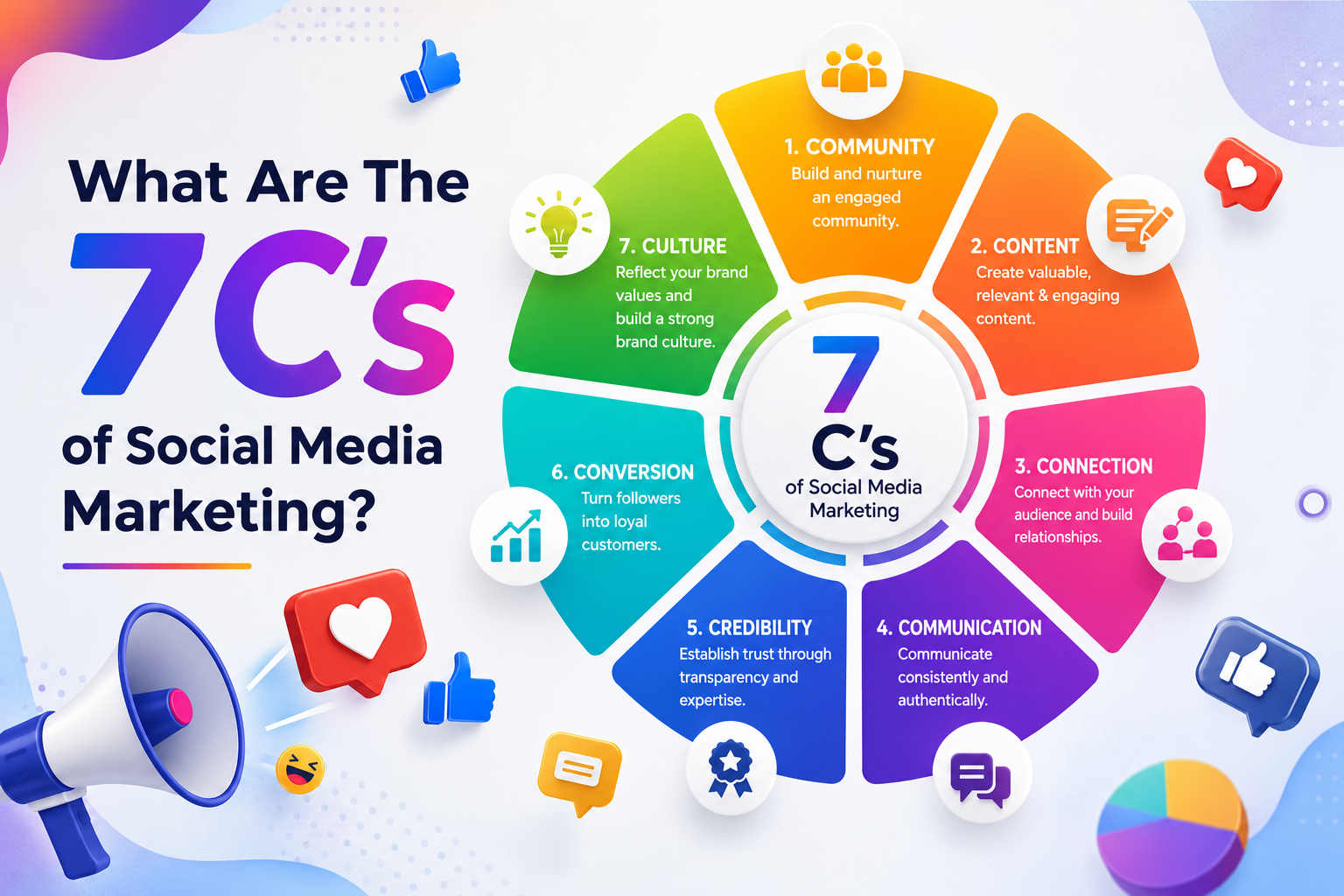
What Are The 7 Cs of Social Media Marketing?
The 7 Cs of Social Media Marketing are Content, Community, Conversation, Connection, Consistency, Credibility, and...

Google Removed FAQ Rich Results, But FAQs Still Help AI Find and Cite Your Website
Short Answer: Yes, FAQs Still Matter More Than Ever Google removed FAQ rich results. A...

How Social Proof and Trust Signals improves Conversion Rate
Social proof and trust signals work. Full stop. Products with just 5 reviews sell 270%...
