How to Rank in ChatGPT Search
December 05 , 2025
Your Business is Invisible Where Your Customers Are Looking
Picture this: Sarah runs a SaaS platform that helps startups manage customer relationships. Her website pulls in thousands of visitors every month. Her Google rankings are solid. Her social media presence is growing.
But here’s what keeps her up at night – when someone types “best CRM for startups” into ChatGPT, her company never shows up.
The truth is, ChatGPT has 200 million weekly active users asking questions. That’s not a small number. That’s a seismic shift in how people search for solutions. When a founder, marketer, or business owner needs an answer, they’re increasingly asking ChatGPT first. Not Google. Not social media. ChatGPT.
And if your business isn’t appearing in those answers? Your competitors are eating your lunch.
The question becomes real: What if your business could appear right there in that conversation? What if when someone asks ChatGPT about your industry, your name came up as a trusted recommendation?
This matters more than most business owners realize.
Why Your Business Disappears in ChatGPT Results
Here’s what most people don’t know that there’s no official ChatGPT SEO playbook yet. No clear guide telling you what to do to rank higher in ChatGPT searches.
Many businesses are confused about where to even start. Should they optimize for ChatGPT? Should they focus on Google first? Do they do both? Nobody’s quite sure.
The confusion runs deeper. Some business owners mix up ChatGPT’s regular answers (which rely on training data) with ChatGPT Search (which pulls from live web pages). They’re different animals. And if you don’t understand the difference, your strategy falls apart.
And then there’s the fear, the suspicion that competitors are already gaming the system. Maybe they’re already appearing in ChatGPT results. Maybe they’ve figured out something that nobody’s talking about publicly.
The reality? Most businesses have no idea ChatGPT ranking even exists as an opportunity. They’re laser-focused on Google because that’s what they know. Meanwhile, a new search frontier is opening up, and early movers are starting to see the advantage.
What Actually Makes ChatGPT Show Your Website
Let’s get specific about how this works.
When someone uses regular ChatGPT and asks a question, it’s pulling from training data, information the AI learned during training. But ChatGPT Search and Browse mode? That’s different. It uses recent web data from trusted sources. It reads current pages. It finds fresh information.
The algorithm that decides which websites show up isn’t random. ChatGPT’s system looks for several things. It wants to see E-E-A-T signals (Expertise, Experience, Authoritativeness, Trustworthiness). It likes clear content structure. It values technical SEO. And it rewards websites that show topical authority – meaning you know your stuff inside and out.
Here’s something important: Many ChatGPT sources overlap with Google’s top results. But they’re not identical. A site can rank decently on Google and still be invisible to ChatGPT, or vice versa. The difference comes down to source trust and authority, not just rankings alone.
Content freshness matters more here than traditional Google SEO. Old, dusty content that used to work fine for rankings? ChatGPT doesn’t love that. It wants to see regular updates. New data. Statistics that reflect today’s reality.
Backlinks still matter too. Domain authority still plays a role. Getting mentioned on reputable websites still helps. The fundamentals haven’t changed completely, they’ve just shifted in priority.
The Core Problem Most Businesses Face
Here’s the catch that nobody’s talking about openly.
Most businesses trying to rank in ChatGPT are using old playbooks. They’re doing what worked for Google in 2015. They’re stuffing keywords. They’re building mediocre backlinks. They’re publishing content that technically answers questions but doesn’t actually prove they know what they’re talking about.
These strategies don’t address the real issue. ChatGPT’s algorithm isn’t looking for keyword density or clever optimizations. It’s looking for actual credibility. Real experience. Proof that you know what you’re saying.
When businesses ignore this, they fail. They spend months optimizing for the wrong things. They get frustrated. Then they give up on ChatGPT ranking altogether.
The ones who win? They’re building authority differently.
The Real Solution: Building ChatGPT Visibility From the Ground Up
Stop trying to game the system. Start building real credibility.
This approach sounds simple because it is. Focus on one core thing: become genuinely known as an expert in your specific area. Build content that proves it. Make your website technically sound. Keep updating what you’ve already created.
That’s it.
When you do that consistently, ChatGPT’s algorithm notices. Google notices. Your customers notice. Everything clicks into place because you’re building something real, not something clever.
The best part? Once this foundation is solid, everything becomes easier. Your conversions improve. Your reputation grows. New opportunities show up that you didn’t expect.
The 5-Step Framework to Rank in ChatGPT Search
Let’s walk through exactly how to make this happen.
Step 1: Master Technical SEO First
ChatGPT doesn’t like slow websites. It doesn’t like pages that look broken on phones. It doesn’t like poor navigation.
Start here: Go to Google PageSpeed Insights and run your homepage. See that score? If it’s below 80, you’ve got work to do. Fix your Core Web Vitals. Make your site speed faster. Ensure everything looks good on mobile.
This takes a few weeks. It’s not glamorous. But it’s the foundation everything else sits on.
Step 2: Build Topical Authority
Instead of creating random content about different topics, pick one main expertise area. Let’s say you’re in email marketing. Make that your hub. Then create 15+ pieces of content around different aspects of email marketing: segmentation, automation, deliverability, list building, etc.
Link these pieces together internally. Create a content cluster where everything points back to your main pillar. This shows ChatGPT that you’re not just writing about email marketing casually. You own this topic.
Map out your top 3 expertise areas this week. Build at least 10 pieces of substantial content in each area.
Step 3: Optimize for E-E-A-T Signals
ChatGPT is increasingly paranoid about trustworthiness. It wants to know who’s writing this and why it should trust them.
Add an author bio with real credentials to every piece of content. If you’re a certified coach, say so. If you’ve been doing this for 10 years, mention it. Cite your sources. Include case studies with actual numbers. Get reviews from other experts in your field.
This takes effort. It’s worth it.
Step 4: Update Content Regularly
Your old content from 2020? It’s stale. ChatGPT Search reads from pages that Google has crawled recently. If your pages haven’t been touched in years, ChatGPT assumes they’re outdated.
Pick your top 10 pages. Update them monthly. Add new statistics. Refresh examples. Update recommendations. Put this on your calendar. Make it a habit.
Step 5: Build Backlinks From Reputable Sources
Not all backlinks matter equally. A link from Forbes matters way more than a link from a random blog.
Guest post on industry publications. Get mentioned in industry reports. Talk to journalists covering your space. Identify 5 high-authority websites in your niche and pitch them ideas for content collaboration.
This is old-school SEO, but it still works.
The Secret Strategy Most People Miss
Here’s something that’ll change how you think about this.
Ask ChatGPT a specific question about your business category. For example, if you’re in fitness coaching, ask: “What are the best home workout apps for beginners?” or “Which fitness coaches specialize in remote training?”
Look at the results. Is your business mentioned?
If not, ask ChatGPT a follow-up question: “What sources did you use for this answer?” ChatGPT will show you the websites and publications it pulled from. That’s your map. That’s where you need to be visible. That’s what you need to fix.
Why? Because if your competitors are showing up in those sources and you’re not, that’s your action plan right there. You need to get featured on those same publications. You need to rank where those sources are pulling from.
It’s that simple. Your competitors’ visibility in ChatGPT search results points directly to your action plan.
How a Fitness Coaching Business Appeared in ChatGPT Search Results
Maria runs a fitness coaching business in a crowded market. Over 100 competitors fighting for attention.
She was frustrated. Her website was decent, but nobody online seemed to know she existed. Then she tried the strategy above. She asked ChatGPT about home workout recommendations and her name wasn’t there.
So she got to work.
Month 1: She fixed her website speed. Her PageSpeed score went from 62 to 95. It sounds boring but it mattered.
Month 2: She created 12 detailed articles around “How to Start Home Fitness” covering beginner routines, common mistakes, equipment needs, everything. She linked them all together.
Month 3: She added her credentials to every article. Certified trainer. 10 years of experience. Before and after photos from actual clients with numbers.
Month 4: She started monthly updates. New research. Updated statistics. Refreshed client testimonials.
Month 5: She published 2 guest articles on major fitness publications. Real publication bylines with links back to her site.
Six weeks later, when someone asked ChatGPT “best home workout for beginners,” Maria’s site started showing up consistently in the answers. Not always first. But there.
Within three months, she was getting ChatGPT referral traffic every single week. People clicking through from ChatGPT conversations to her website. Some of them became paying clients.
She wasn’t doing anything exotic. She was just doing the fundamentals better than her competitors.
3 Advanced Tactics to Stay Ahead
Tactic 1: Write for ChatGPT’s Question Style
People ask ChatGPT differently than they ask Google. They ask conversational questions. They want comparisons. They ask for opinions.
Write for these patterns. Create content that answers “What is…?” questions. “How to…?” questions. “Which is better…?” questions. That’s what ChatGPT’s looking for.
Tactic 2: Use Schema Markup
This is technical but worth doing. Schema markup is structured data that helps ChatGPT understand your content better. Use FAQ schema. Author schema. Organization schema.
It’s not complicated to implement. Google’s Schema Markup Helper will walk you through it. When ChatGPT reads your page, it understands what it’s looking at immediately.
Tactic 3: Create Detailed, Specific Content
ChatGPT loves long-form guides. 2000+ words minimum for main pillar content. But not rambling. Organized. Clear sections. Subheadings that make sense.
Include comparison tables. Step-by-step tutorials. Data and statistics. Make it something ChatGPT can extract and cite.
Your Quick Implementation Checklist
Getting started doesn’t need to be complicated. Use this checklist to make sure you’re covering all the bases for ChatGPT visibility.
Week 1 – Technical Foundation:
- [ ] Run your homepage through Google PageSpeed Insights and document the score
- [ ] Identify and fix your top 3 Core Web Vitals issues
- [ ] Ensure mobile responsiveness on key pages
Week 2 – Authority Signals:
- [ ] Add author credentials and bios to all main content
- [ ] Implement FAQ schema on your most important pages
- [ ] Set up Google Search Console and Bing Webmaster Tools (ChatGPT uses Bing data too)
Week 3 – Content Strategy:
- [ ] Map your top 3 expertise areas and list 10+ subtopics for each
- [ ] Create an internal linking strategy for your content clusters
- [ ] Schedule monthly content refresh reminders for your top 10 pages
Ongoing:
- [ ] Track ChatGPT mentions using the “Ask ChatGPT what sources” strategy each month
- [ ] Update top content pages with fresh data
- [ ] Pitch 1-2 guest posts to authority sites in your niche monthly
What NOT to Do for ChatGPT Ranking
Here’s the trap many businesses fall into.
Don’t try to trick ChatGPT like it’s 2005 Google. Keyword stuffing won’t work. Cheap backlink schemes won’t work. Cloaking, redirects, and other black-hat tactics? Instant credibility killer.
More importantly, don’t ignore Google SEO thinking ChatGPT is separate. It’s not. ChatGPT’s algorithm is heavily influenced by source authority and trusted content. Build for Google first, ChatGPT follows.
And don’t publish content just to publish. Quality over quantity always wins here. One 2000-word authoritative guide beats 10 thin, rushed articles every single time.
The reality that most miss: 60%+ of business decision-makers and researchers now use AI tools like ChatGPT for their initial research. Ignoring this isn’t bold. It’s just leaving money on the table while your competitors build their presence.
Your Competitive Advantage Starts Today
ChatGPT is the new search frontier. This isn’t theoretical anymore. This is happening now.
Early movers in your industry are already benefiting. They’re appearing in ChatGPT conversations. They’re getting traffic. They’re capturing customers who didn’t even know they existed six months ago.
Here’s your roadmap: Technical SEO → Topical Authority → E-E-A-T Signals → Content Freshness → Quality Backlinks.
Start this week with Step 1. Audit your website’s Core Web Vitals using Google PageSpeed Insights. Identify your top 3 technical issues. Fix them.
That’s it. That’s your first move.
Think about where you’ll be in six months. Consistent traffic from ChatGPT. New customers you wouldn’t have reached through traditional search engine optimization services. Your business visible where your actual customers are looking.
That’s not luck. That’s strategy. And you can start today.
Popular Post
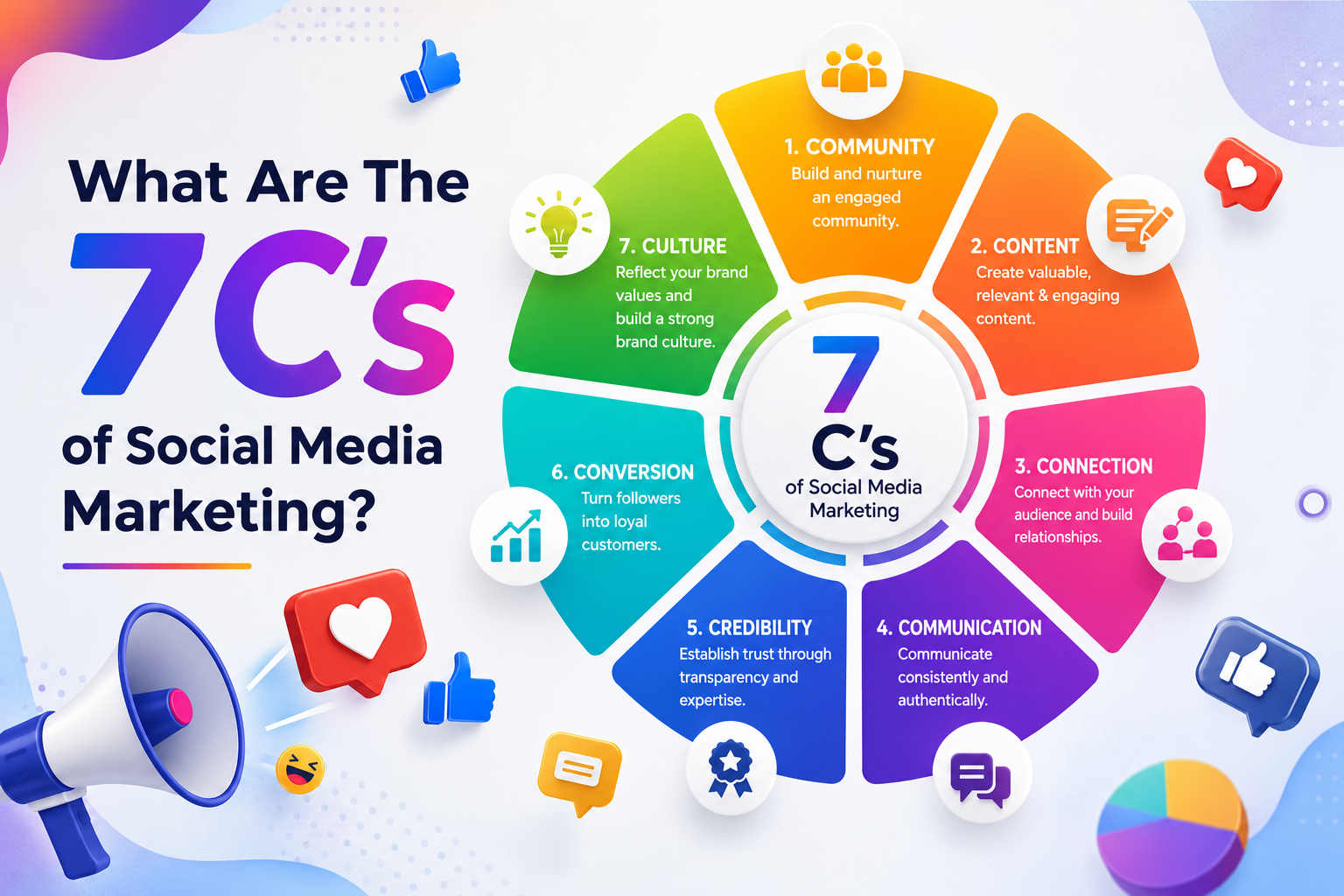
What Are The 7 Cs of Social Media Marketing?
The 7 Cs of Social Media Marketing are Content, Community, Conversation, Connection, Consistency, Credibility, and...
Google Removed FAQ Rich Results, But FAQs Still Help AI Find and Cite Your Website
Short Answer: Yes, FAQs Still Matter More Than Ever Google removed FAQ rich results. A...

How Social Proof and Trust Signals improves Conversion Rate
Social proof and trust signals work. Full stop. Products with just 5 reviews sell 270%...
