Google Removed FAQ Rich Results, But FAQs Still Help AI Find and Cite Your Website
May 12 , 2026
Short Answer: Yes, FAQs Still Matter More Than Ever
Google removed FAQ rich results. A lot of SEOs panicked. Some businesses quietly pulled their FAQ sections. That was a mistake.
FAQs still help with:
- AI visibility and citations
- Voice search
- Website conversions
- Customer trust
- Long-tail search traffic
- User experience
Here’s what most people got wrong: Google removed the search display feature, not the value of FAQ content. That is the biggest misunderstanding in SEO right now.
| What Changed? | Before | Now |
| Search display | FAQ got expandable snippets | FAQ helps AI retrieval |
| SERP benefit | Extra search page space | Better semantic understanding |
| Business value | Click-through rate boost | Trust + citations + conversions |
What Did Google Actually Remove From Search?
Let’s be clear. Google did not ban FAQs. Google did not say stop writing them.
What Google removed was the FAQ rich result. That expandable question-and-answer box you used to see directly in search results? That visual feature is gone. But the content behind it is still incredibly useful.
FAQ schema and FAQ content still help machines understand your pages better. And honestly, that matters more today than it ever did before. Google is moving away from visual SERP clutter and toward AI-powered answers. FAQs fit right into that shift.
Why FAQs Are Now a Core Part of AI Search Visibility
This is where things get interesting.
AI Processes Questions Better Than Dense Paragraphs
Think about how someone searches today. They don’t type “cybersecurity small business.” They ask, “How much does cybersecurity cost for a small business?” AI systems are trained to match those conversational queries.
A well-written FAQ creates an exact match for those questions. Here’s a real example:
Q: How much does cybersecurity cost for a small business?
A: Small business cybersecurity typically costs between $100 and $5,000+ per month. The exact number depends on your level of monitoring, compliance needs, and risk profile.
That is the kind of block AI can pull directly. A buried sentence inside a 2,000-word article? Much harder to extract. Modern retrieval systems match meaning and intent, not just keywords.
FAQs Create Passage-Level Content Blocks That AI Can Extract
AI doesn’t always cite full pages. It often pulls specific passages, short answers, or entity-rich content blocks. FAQ sections naturally create those blocks.
This directly improves your chances of passage ranking, AI extraction, and citation inside tools like ChatGPT, Perplexity, and Google AI Overviews. Websites that use schema markup for AI search alongside structured FAQs give AI systems a much cleaner signal. That’s one of the most practical things you can do with technical SEO services today, and it doesn’t require a massive budget.
FAQs Match the Way Real People Search Now
Old search: “best CRM software.” New search: “What is the best CRM for a 10-person sales team with a tight budget?”
FAQs align with natural language. That matters for Google AI Overviews, ChatGPT browsing, voice assistants, and search copilots. All of them process conversational queries. Your FAQ section can answer them directly.
Why FAQs Still Convert Website Visitors Into Buyers
Forget AI for a second. FAQs serve a very practical business purpose.
FAQs Remove the Questions That Stop Buyers From Acting
People leave websites because they have questions nobody answered. Common doubts:
- Is this right for my business?
- How long does setup take?
- What does it cost?
- Is there a contract?
- Will this work for my industry?
A visitor with an unanswered question is a lead you lost. Studies show that 55% of visitors spend fewer than 15 seconds on a page. If your FAQ doesn’t answer their biggest objection quickly, they’re gone.
FAQs Reduce Bounce Rate and Increase Time on Page
When visitors get fast, clear answers, they stay longer, trust faster, and convert sooner. Businesses that added FAQ sections to service pages have reported bounce rate drops of 10 to 20%. That’s real behavior data, not a theory.
FAQs Cut Down Repetitive Support Costs
Some businesses report cutting inbound support tickets by 30% or more just by documenting answers to their top 20 questions. Pricing, delivery timelines, setup steps, guarantees. Document them once. Save your team hours every week.
Why Most Business FAQs Are a Complete Waste of Time
Here’s the honest truth: most FAQs on business websites are terrible.
Bad FAQ: Q: Why choose us?
Nobody searches that. No AI is going to cite that. No buyer feels reassured by that.
Good FAQ: Q: How long does cybersecurity setup take for a small business?
That matches real search behavior. That’s what a buyer actually worries about. That’s what AI is trained to find and surface. The difference isn’t effort. It’s thinking from the customer’s perspective, not the company’s.
What Questions Should Your Website Actually Answer?
Use these intent clusters to build real topical coverage:
Problem Questions: Why is my website traffic dropping? Why are my leads not converting from the landing page?
Comparison Questions: Managed IT vs. in-house IT. SEO vs. PPC for local businesses.
Cost Questions: How much does CRM implementation cost? What affects the price of managed IT contracts?
Risk Questions: What happens if I delay cybersecurity for another six months?
Process Questions: What happens after I book a consultation?
Trust Questions: How do you protect client data?
This kind of coverage builds topical authority. That is one of the core signals modern search engines use to rank and trust a website in competitive categories.
How to Write FAQ Content That AI Can Actually Understand
Step 1: Collect Real Questions
Go to your sales calls, your emails, your live chat logs, your support tickets. What do people actually ask before they buy? Those are your FAQs. Not the ones you wish they’d ask.
Step 2: Write One Clear Answer Per Question
Follow this format: Question, direct answer, supporting details, next step.
Example:
Q: How long does onboarding take?
A: Most clients are fully onboarded within 7 to 14 days. The exact timeline depends on your team size, integrations needed, and technical setup. Your onboarding roadmap is shared during the kickoff call.
Short. Clear. Actionable.
Step 3: Add FAQ Schema Markup
If you’re serious about technical SEO services, this step matters. Using schema markup for AI search sends structured signals to both traditional search engines and AI systems. Only add FAQ schema when the question and answer actually exist on the page. Don’t mark up content that isn’t there.
Step 4: Place FAQs Near Conversion Points
Service pages, pricing pages, product pages, landing pages, industry-specific pages. These are where buyers make decisions. Answer their last-minute doubts right there.
Where to Place FAQs on Your Business Website
Homepage: Answer trust questions. Who are you, what do you do, why should someone believe you.
Service Pages: Answer buying questions. What’s included, timeline, cost.
Pricing Pages: Answer cost objections. What affects pricing, what’s not included, is there a contract.
Blog Pages: Answer informational questions tied to that specific topic.
Contact Pages: Answer process questions. What happens after someone fills out the form.
FAQ SEO Checklist for 2026
Before you publish any FAQ section, check these:
- One question per block
- Written in real customer language
- Direct answer comes first
- Simple, clean formatting
- Schema markup added
- Internal links included
- Readable on mobile
- Updated at least once a year
The Future of SEO Is Not More Content. It’s More Answerable Content.
Google removed FAQ rich results. But AI search made FAQs more valuable than before.
The websites winning today aren’t the ones publishing 3,000-word articles every week. They’re the ones with clear, honest answers to real customer questions. AI can find them. Search engines trust them. Buyers choose them.
So if your competitor’s site answers the question better than yours, their page gets cited. Their name gets mentioned. Their lead converts.
That is what modern SEO actually looks like.
Want Better AI Visibility? Start Here
Pick one page on your website. Write down your top 20 customer questions. Turn them into clean FAQ answers. Add schema markup for AI search. That single effort can lift your trust, your conversions, your search visibility, and your AI citations.
Not next year. Start this month.
Popular Post
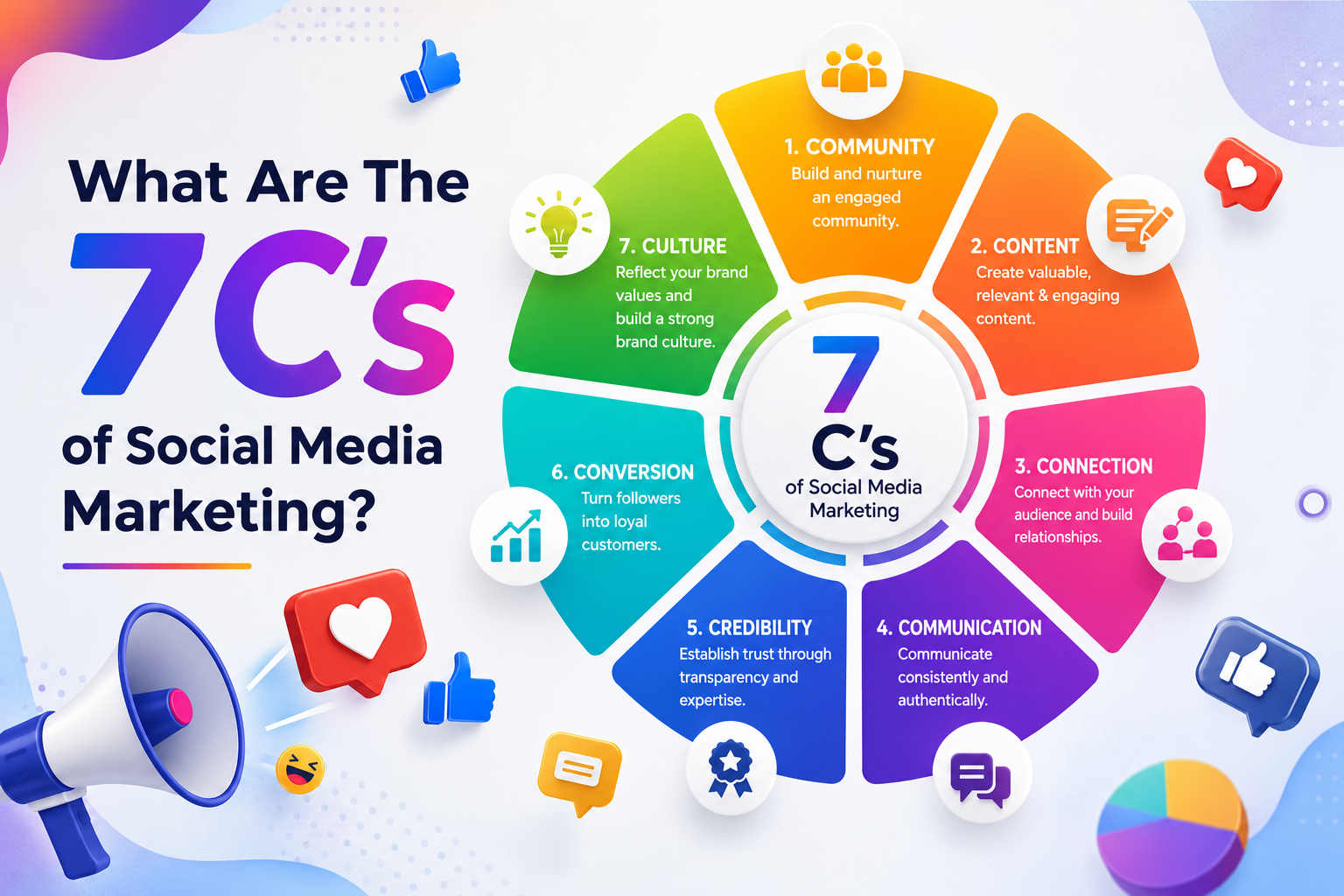
What Are The 7 Cs of Social Media Marketing?
The 7 Cs of Social Media Marketing are Content, Community, Conversation, Connection, Consistency, Credibility, and...
Google Removed FAQ Rich Results, But FAQs Still Help AI Find and Cite Your Website
Short Answer: Yes, FAQs Still Matter More Than Ever Google removed FAQ rich results. A...

How Social Proof and Trust Signals improves Conversion Rate
Social proof and trust signals work. Full stop. Products with just 5 reviews sell 270%...
