How Social Proof and Trust Signals improves Conversion Rate
February 18 , 2026
Social proof and trust signals work. Full stop. Products with just 5 reviews sell 270% more than products with none. Trust badges alone have pushed revenue up 17 to 21% across multiple e-commerce sites. If your checkout page is missing these elements right now, you’re leaving real money behind every single day. This guide breaks down exactly what to add, where to put it, and how to measure whether it’s working.
What Social Proof and Trust Signals Actually Mean
Let’s clear this up before anything else.
Social proof is evidence that real people, people like your customer, have already bought from you and didn’t regret it. Trust signals are different. They’re proof that your site itself is safe, your payment process is secure, and you’re a legitimate business.
Both matter. But they solve different problems.
Social proof removes the doubt around your product. Trust signals remove the fear around your site. You need both working together, or customers hesitate at the last step and abandon their cart.
Think about it. Would you hand your credit card to a stranger on the street? Of course not. But if that stranger had 4,000 five-star reviews and a Norton Secured badge, you’d feel a lot better about it.
Why the Human Brain Responds So Strongly to Social Proof
Robert Cialdini studied this for years. His core finding was simple: when people don’t know what to do, they copy what others are doing.
Online, that plays out in very specific ways. A visitor lands on your product page feeling uncertain. They don’t know you. They haven’t touched your product. So they look for clues. Reviews, star ratings, customer photos, real purchase notifications. These clues answer one core question: “Can I trust this?”
Here’s what the data says about how that plays out:
93% of shoppers say online reviews influence their purchase decisions. Not occasionally. Consistently. And 92% say they hesitate to buy when no reviews are visible at all. That’s almost everyone second-guessing you simply because you didn’t show them proof.
The 6 Types of Social Proof That Actually Drive Conversions
1. Customer Reviews and Star Ratings
This is the foundation. If you fix nothing else, fix this.
Why it matters: Products with 5 or more reviews see 270% higher purchase probability compared to products with zero reviews. That’s not a small nudge. That’s transformational.
How to implement it: Place your aggregate star rating directly below the product title. Then put 3 to 5 recent reviews right beneath the “Add to Cart” button. Use verified-purchase badges so people know these aren’t made up. And here’s something most people get wrong: aim for 4.2 to 4.5 stars, not 5.0. A perfect score looks suspicious. People trust slightly imperfect things more.
Proof it works: Amazon built its entire conversion model around this. Every product page is structured so reviews are impossible to miss. Their verified purchase system is the reason shoppers trust them more than almost any other retailer on the planet.
2. Video Testimonials and Case Studies
Short customer videos feel personal in a way that text just can’t replicate.
Why it matters: Video testimonials lift conversions by 80% on average. That’s a massive return for something as simple as asking a happy customer to record a 45-second clip on their phone.
How to implement it: Keep videos between 30 and 60 seconds. Ask customers to describe one specific problem they had before buying and how your product solved it. Don’t over-produce it. Slightly rough, genuine footage performs better than polished corporate videos. Place these on your homepage and product pages where the decision is being made.
Proof it works: HubSpot uses detailed ROI case studies alongside client logos on their B2B landing pages. Their demo booking rates reflect it. When prospects see businesses they recognize, explaining specific results in their own words, the credibility gap closes fast.
3. Client Logos and “As Seen In” Sections
A row of recognizable brand logos does something quietly powerful.
Why it matters: Authority transfers. When a well-known brand is associated with your business, visitors assume competence by proxy. This works especially well on home pages and landing pages where you need to build trust quickly.
How to implement it: Get explicit permission from clients before using their logo. Then create a clean row near the top of your homepage. For media features, use a simple “As Seen In” header with publication logos below. Keep it visual, not cluttered.
Proof it works: Startups regularly see their homepage conversions climb after adding a single recognizable logo. One SaaS company reported a 34% increase in trial signups after adding their first Fortune 500 client logo to their landing page.
4. User-Generated Content (Real Customer Photos and Videos)
UGC is social proof in its most raw and believable form.
Why it matters: Real photos from real customers convert at rates 29% higher than product-only images. In apparel specifically, UGC delivers a 207% average conversion increase. People want to see how your product looks on an actual human, not a professional model in perfect lighting.
How to implement it: After purchase, email customers asking them to share a photo using your product. Offer a small discount on their next order. Build a gallery on your product page using tools like Loox or Yotpo. Glossier built a massive community around reposting customer content from Instagram directly to their product pages. The result was consistent double-digit conversion lifts.
5. Real-Time Activity Notifications
“Sarah in Chicago just purchased this” sounds simple. But it works hard.
Why it matters: Real-time notifications boost conversions anywhere from 10% to 98%, with a median lift around 37%. They create urgency and validation at the same time. Someone just bought this. That means it’s real, it’s popular, and maybe you should grab yours before it’s gone.
How to implement it: Tools like ProveSource, Fomo, TrustPulse, or WiserNotify handle this with no-code setup. Connect them to your purchase data and set up small pop-up notifications in the corner of the screen. Keep the messaging simple and specific. Show the person’s first name, their city, and the product they bought. Set a natural delay so notifications don’t appear too fast or feel fake.
6. Numbers and Social Statistics
Big numbers are credible and reassuring.
Why it matters: “Over 2 million customers served” or “4.8 out of 5 from 12,347 reviews” gives visitors an anchor. It tells them this isn’t a risky new thing. It’s something a lot of people have already tried.
How to implement it: Pull real numbers from your CRM, review platform, or sales data. Place them prominently on your homepage, your about page, and your product pages. Update them regularly. A stat that says “5,000+ happy customers” and hasn’t changed in three years starts feeling stale.
Trust Signals: The Security Layer Your Checkout Needs
Even if your social proof is perfect, buyers can still hesitate at the payment step. That’s where trust signals come in.
SSL, Security Badges, and Payment Icons
Why it matters: Perceived payment insecurity is the single biggest cause of cart abandonment. Adding trustmarks has increased revenue 17 to 21% across e-commerce sites measured in multiple studies.
How to implement it: Your SSL certificate (HTTPS) is non-negotiable. Make sure the padlock shows in the browser. Then add security badge images from Norton, McAfee, or similar in your checkout section. Show payment icons for Visa, Mastercard, PayPal, Apple Pay, and any other accepted methods right next to your payment fields.
Proof it works: One e-commerce client added a simple set of trustmarks to their checkout page and saw a 21% revenue increase within 30 days. No product changes. No pricing changes. Just visible security signals.
Money-Back Guarantees and Return Policies
Why it matters: A clear, no-hassle return policy removes the risk from the buyer’s side of the transaction. If something goes wrong, they’re not stuck.
How to implement it: Put your guarantee statement near the “Buy” button, not hidden in the footer. Make it specific: “30-day money-back guarantee, no questions asked” is far more reassuring than “returns accepted.” Use a small badge or icon to make it visually distinct.
Transparent “About Us” Pages With Real People
People buy from people. Not from faceless companies.
How to implement it: Include real team photos. Write your story in plain language. Link to real social profiles. Explain why you started the business. This is one of those things that seems minor but actually has a quiet, steady effect on trust throughout the purchase journey.
Where to Place These Elements for the Biggest Impact
Placement matters as much as the element itself. Putting a review widget in your footer won’t do much. Here’s what works:
Your homepage needs your star rating, 3 testimonials, and a logo wall visible without scrolling.
Product pages need reviews, customer photos, and trust badges directly under the price and beside the call to action. Not below the fold. Right there, where the decision is being made.
Checkout pages need security badges, your guarantee statement, and recent purchase notifications. This is where doubt spikes. Meet it with proof.
Your email campaigns, especially abandoned cart sequences, should pull in 2 to 3 reviews relevant to what the person left behind. Emails with reviews see 25% higher click-through rates.
Your footer should have all trust badges and certifications on every page so they’re always visible without being intrusive.
Common CRO Mistakes People Make With Social Proof
Here’s the catch. A lot of businesses add social proof and still don’t see results. Usually it’s because of common CRO mistakes that seem small but quietly kill conversions.
Any experienced conversion rate optimization consultant will tell you these show up constantly:
Using fake or generic testimonials. 95% of shoppers can spot these. Vague praise like “Great product, highly recommend!” doesn’t move anyone. Specific, story-driven reviews do.
Letting reviews go stale. A review from 2019 isn’t reassuring in 2026. Customers notice timestamps. Refresh your review requests regularly and rotate in newer content.
Overloading pages with proof. More isn’t always better. Three to five social proof elements per page section is the ceiling. Beyond that, it becomes noise and people tune it out.
Ignoring mobile. More than half of purchases happen on phones now. A review widget that looks great on desktop but breaks on mobile is worse than no widget at all.
Using only text when photos and video convert far better. This is one of the most common CRO mistakes and one of the easiest to fix. Even one real customer photo outperforms a paragraph of written praise.
Showing negative social proof by accident. “0 reviews” or “No one has viewed this recently” does the opposite of what you want. If a product has no reviews yet, don’t show the review widget. Wait until you have at least 5.
How to Measure Whether Your Social Proof Is Working
You want numbers, not guesses.
Track your conversion rate on pages with social proof elements versus pages without. This comparison tells you exactly what’s lifting performance. Watch the engagement rate on your review widgets and UGC galleries. Are people scrolling through them? How long are they spending? Compare sales from visitors who interacted with UGC versus those who didn’t. Track your cart abandonment rate over time as you add trust signals. And watch your revenue per visitor, because that’s the metric that captures the full picture.
Most review platforms like Yotpo, Loox, or EmbedSocial have built-in dashboards that show this data clearly. Connect them to Google Analytics for a fuller view. Most businesses see measurable results within 30 to 60 days of implementation.
One real example: a company that added social proof highlights to their registration flow saw form submissions increase by 8.63%. That translated to $543,000 in annualized revenue from one change to one page.
Your 7-Day Action Plan to Start Seeing Results
Day 1: Walk through your site as a first-time visitor. Write down every place where a new customer might feel uncertain or unsecured. That list is your to-do list.
Day 2 and 3: Email your last 100 customers and ask for a review. Ask them to share a photo if they’re willing. A simple, personal email gets a 6 to 8.5% response rate. That’s 6 to 8 new reviews from one email.
Day 4: Pick one review platform. Yotpo and Loox both have free plans. Install it, connect your store, and add the review widget to your most visited product pages.
Day 5: Add security badges and your guarantee statement to your checkout page. If you’re on Shopify, this takes about 20 minutes using the theme editor.
Day 6: Set up one real-time notification tool. ProveSource or TrustPulse both offer free trials. Connect it to your purchase data and go live.
Day 7: Set up a basic A/B test. Compare your original checkout page against your updated version with trust signals. Check your analytics after 2 weeks and see what the data shows.
Final Thought
Social proof isn’t a trend. It’s how humans naturally make decisions under uncertainty. When you give buyers evidence that other people like them have already made this decision and been happy about it, you remove friction. You replace hesitation with confidence.
And confidence is what gets people to click buy.
Start with reviews and security badges. Those two alone can drive double-digit conversion lifts before you even get to video testimonials or UGC galleries. Build from there, measure everything, and treat it as an ongoing process, not a one-time setup.
The businesses winning at this aren’t doing anything magical. They’re just showing proof, placing it well, and keeping it fresh.
Popular Post
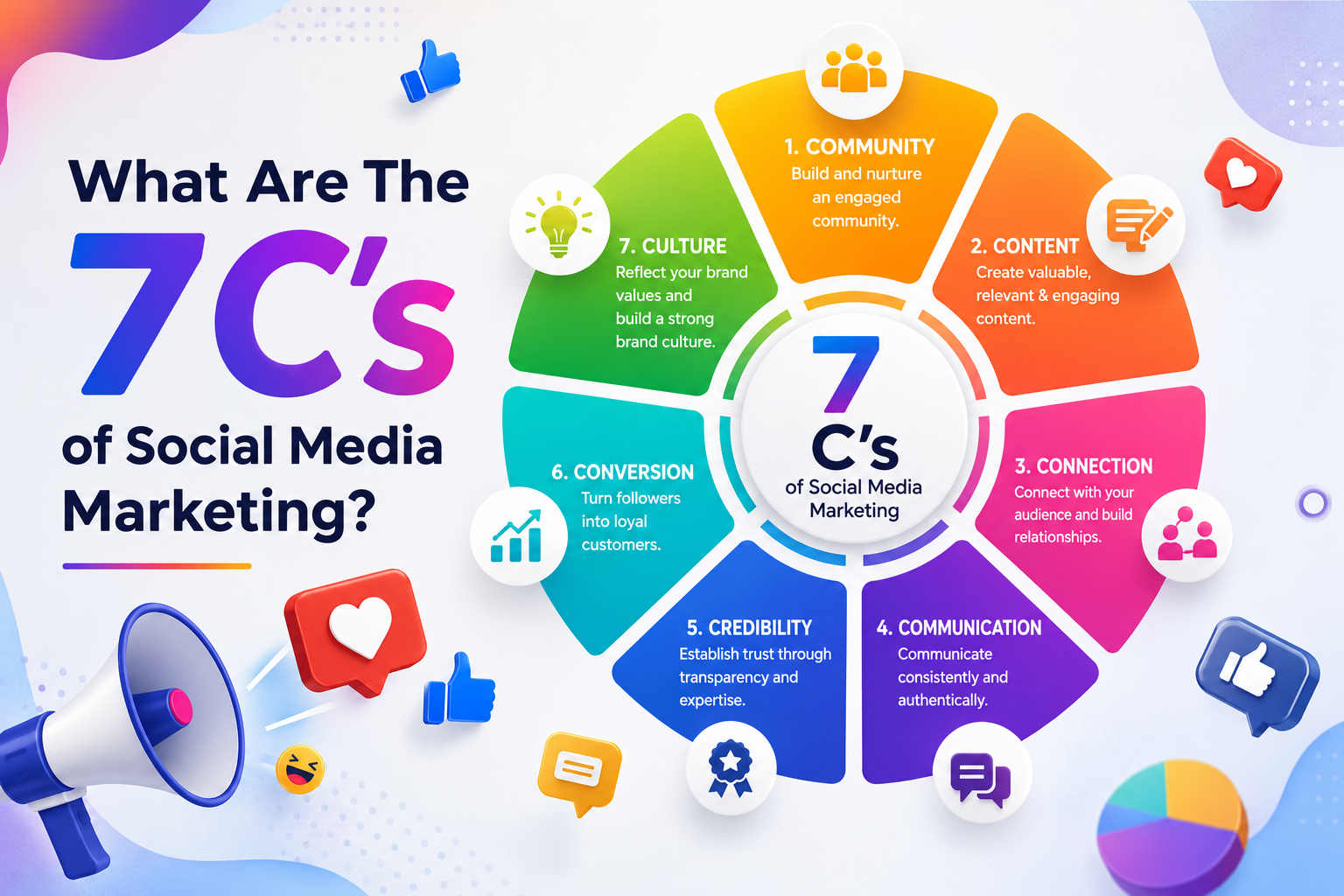
What Are The 7 Cs of Social Media Marketing?
The 7 Cs of Social Media Marketing are Content, Community, Conversation, Connection, Consistency, Credibility, and...
Google Removed FAQ Rich Results, But FAQs Still Help AI Find and Cite Your Website
Short Answer: Yes, FAQs Still Matter More Than Ever Google removed FAQ rich results. A...
How Social Proof and Trust Signals improves Conversion Rate
Social proof and trust signals work. Full stop. Products with just 5 reviews sell 270%...
