How Small E-commerce Brands Use AI in Marketing Automation
February 09 , 2026
Small e-commerce brands are using AI to handle the grunt work in marketing automation. They’re sending emails at the exact moment customers actually want to buy. They’re showing the right product recommendations without lifting a finger. And they’re bringing back lapsed customers with personalized win-back campaigns that feel handwritten but run on their own.
The key? They’re not replacing people. They’re replacing repetitive decisions.
This guide shows you what they’re automating, why it works, and how you can start this week.
AI-Powered Marketing Automation for E-commerce: Why It Actually Matters Right Now
The Real Problem Small Brands Face
Your team is small. Maybe it’s just you and one other person handling everything from fulfillment to customer service to marketing. And yet your competitors, the bigger ones with bigger budgets, they’re somehow sending perfectly timed emails, showing personalized product recommendations, and recovering abandoned carts while you’re still manually typing out email sequences.
Here’s what’s changed: ad costs have gone insane. A decade ago, Facebook ads cost $0.50 per click. Now? Many brands are paying $1.50 to $3+ per click. That means you can’t just throw money at ads and hope some of it sticks. Every customer matters.
At the same time, your customers expect personalization. They don’t want generic “Hey there, we miss you!” emails. They want to see products they actually looked at. They want reminders at times that make sense for their lives, not just whenever a calendar automation tells them to send it.
That’s where marketing automation services come in. But not the old kind that just sends the same email to everyone at the same time. The new kind that actually thinks.
What Changed About Marketing Automation
For years, marketing automation meant writing rules. If customer bought X, send Y after 3 days. If they clicked category Z, tag them and wait 5 days before sending another email. It worked okay. But it was rigid.
AI changes this completely. Instead of following fixed rules, AI learns from your actual data. It sees patterns in when customers are most likely to open emails, which products they’re most likely to click, and which lapsed customers might actually come back if you reach them on their phone instead of their email.
One skincare brand we worked with used AI-powered email timing and saw a 34% increase in email click-through rates in their first month. They weren’t sending more emails. They were just sending them when people actually wanted to read them.
How AI Actually Works in Your E-commerce Funnel
Stage 1: The Visitor Who Hasn’t Bought Yet
When someone lands on your store for the first time, you have maybe seconds to make an impression. AI helps here in three concrete ways.
Product recommendations: Instead of showing the same “best sellers” to everyone, AI watches what they’re browsing. Someone looking at blue running shoes for 45 seconds? AI suggests similar products. Someone who just looked at a water bottle? Boom….also shows them electrolyte packets.
Exit-intent offers: You know those popups that appear when someone tries to leave? AI decides whether to show one at all, and if so, what discount to offer. Some visitors are price-sensitive and some aren’t. They just haven’t found what they want yet. Different approach.
On-site personalization: The homepage someone sees isn’t the same one everyone sees. First-time visitors see something different than returning customers. Mobile users see something different than desktop users. It sounds complicated but it’s actually just AI matching people to experiences they’re more likely to respond to.
Why this matters: You’re not fighting with one generic homepage anymore. You’re giving each visitor a tailored path. A fitness brand that implemented this saw a 28% boost in first-time visitor conversion within 60 days.
Stage 2: The Lead – People Interested But Not Buying
Once someone’s given you their email, the game changes. They’ve said “I’m interested.” Now you have to prove it’s worth their time.
Smart welcome emails: The welcome sequence isn’t the same for everyone. Someone who visited your running section gets a different welcome than someone browsing yoga gear. Content tone, product suggestions, even the first email’s timing, all personalized based on what they did on your site.
Behavior-based follow-ups: They’re not on a 3-day timer anymore. AI notices when they’ve been inactive and nudges them. It notices when they’ve looked at something multiple times and sends relevant information. It’s less “we haven’t heard from you” and more “remember that thing you were curious about?”
Interest tagging: AI automatically tags visitors based on their behavior. Someone who browsed men’s products three times gets tagged differently than someone who browsed once. Someone who viewed premium items differently than budget items. A digital marketing strategist would normally do this manually. AI does it instantly.
Why this matters: Welcome sequences are usually your highest-performing emails. Make them personal instead of generic, and your email list actually becomes an asset instead of just a list. Furniture brands using behavior-based welcome sequences are seeing open rates hit 45-52%, compared to a 25-30% average for generic welcomes.
Stage 3: Existing Customers – Keeping Them Coming Back
This is where AI really earns its keep. Because keeping someone who’s already bought is way cheaper than finding someone new.
Repeat purchase reminders: AI knows how often someone buys. If you sell protein powder and your data shows customers run out every 35 days, AI reminds them around day 32. Not day 30. Not day 35. Day 32 for that specific person because that’s when they’re statistically most likely to re-order.
Upsell that actually makes sense: When someone buys pants, AI suggests belts or shoes they’ve already looked at, not random stuff. It’s not pushy. It’s just helpful.
Reorder predictions: This one’s wild. AI can predict which existing customers are about to buy again and reminds them right before they search. A home goods brand reduced the time between purchases by 9 days using predictive reorder campaigns.
Why this matters: Repeat customers spend 67% more than new customers over their lifetime. One extra purchase per year per existing customer could double your revenue without touching your ads.
Stage 4: People Who’ve Gone Quiet
Lapsed customers are weird. Some are truly gone: life changed, they found a competitor, whatever. But others? They’re just dormant. They might come back for the right reason.
Win-back timing: AI figures out who’s actually lost vs. who’s just quiet. Then it decides when to reach out. Some people respond better to emails six months later. Others should hear from you faster.
Offer intelligence: It’s not the same discount for everyone. Someone who spent $200 shouldn’t get the same offer as someone who spent $30. AI matches incentive to value.
Channel choice: Should you email them? Text them? Show them an ad? AI knows which channel has the best shot for each person based on how they engaged before.
Why this matters: Winning back a lapsed customer costs 1/25th the cost of acquiring a new one. A coffee subscription brand brought back 18% of their dormant customers in one campaign, adding $47,000 in revenue they didn’t expect.
AI Tools You Need for Smarter eCommerce
AI-Powered Email Automation Platforms
These do the heavy lifting on timing and personalization. Look for tools that:
- Predict the best send time for each person individually (not batch sends)
- Write subject lines and A/B test them automatically
- Adjust content blocks based on what someone looked at or bought
The gap between “email marketing” and “AI email marketing” is honestly night and day. Generic tools guess. Smart tools know.
Proof: Ecommerce brands using AI-powered subject line testing see 20-40% improvement in open rates without changing their audience size.
Customer Segmentation Software
Here’s the thing about segmentation: everyone has a customer list. But most people segment wrong. They look at purchase history. That’s it.
AI segmentation goes deeper. It groups people by:
- Predicted lifetime value (who’s worth acquiring, who’s a one-time buyer)
- Churn risk (who’s about to leave, flagged before they’re gone)
- Purchase intent (who’s window shopping vs. who’s seriously considering)
- Value alignment (which customers actually care about your brand vs. just price hunters)
This matters because your email strategy changes completely depending on who you’re talking to.
Proof: A beauty brand that segmented by churn risk and sent targeted retention emails to at-risk customers dropped their churn rate from 8.2% to 4.1% in one quarter.
Website Personalization Engines
Your website isn’t one website. Not anymore. It’s dozens of variations.
Tools here let you:
- Show different products to different visitors based on behavior
- Change banners, colors, and CTAs based on who’s looking
- Adjust prices or offers dynamically (within reason)
- Serve mobile users a completely different experience
Tools to automate content creation can also handle this at scale, think recommendation widgets that write themselves based on your product database.
Proof: A fashion retailer that personalized their homepage and product recommendations for each visitor segment saw a 31% increase in conversion rate and a 19% increase in average order value.
Analytics That Actually Make Predictions
Most analytics tools tell you what happened. “You got 1,000 visitors, 50 converted.” Cool, but what does that tell you about tomorrow?
Predictive analytics tell you:
- Which visitors are most likely to buy right now
- How much each customer will spend over their lifetime
- When customers are going to churn before they actually churn
- What your best next move is (email them? Retarget? Leave them alone?)
This is how you move from reactive to proactive.
Proof: A supplement brand using predictive analytics for customer lifetime value was able to segment their email list and spend their ad budget 23% more efficiently.
Real Examples of AI Marketing Automation in Action
Smart Abandoned Cart Recovery That Actually Feels Personal
Here’s the old way: customer puts something in their cart and leaves. Two hours later, you send the same “don’t forget your item!” email to everyone who abandoned a cart that day.
Here’s the new way:
A customer adds running shoes to their cart and leaves. AI sees they visited three times before, so they’re serious. It waits 1.5 hours (that’s when this person typically checks email). It shows the exact shoes they left in the cart. It notices they live somewhere cold, so it suggests moisture-wicking socks in the same email. It doesn’t add a discount because this person’s already spent $600 with you.
Another customer abandoned a cart. AI notices this is their first time visiting and they have no email history. Maybe they need more of a nudge. It sends immediately with a 15% discount and emphasizes free shipping.
Both emails hit at the right time. Both feel personalized. Both have higher recovery rates.
Real result: An online footwear store using AI-powered abandoned cart recovery recovered 19% of abandoned carts (vs. 9% before). That’s $34,000 extra per month.
Welcome Series That Changes Based on First Impressions
First impressions matter online just as much as they do in person. But most brands send everyone the same welcome sequence.
Here’s what AI changes:
A new visitor from your TikTok ad who’s 22 years old gets a different welcome series than a 45-year-old from an email retargeting campaign. One email order suggests new collection items. The other focuses on bestsellers and why people trust your brand.
Someone who spent 8 minutes looking at your homepage and clicked five categories? Different tone. They’re seriously exploring. The email tone is exploratory.
Someone who bounced in 12 seconds? Still send a welcome, but maybe skip the long storytelling. Go straight to value.
Real result: A sustainable fashion brand that sent personalized welcome sequences based on first-session behavior saw 41% of welcome emails lead to a first purchase, vs. 18% for generic welcomes.
Predictive Reorder That Catches Customers Before They Search
This is pure magic when it works. AI notices patterns in repeat purchases. Some people buy your protein powder every 28 days. Some wait 42 days. Some skip months.
AI learns these patterns and reminds customers right before they’re statistically most likely to re-order. Not a generic “we miss you.” But “your last order of chocolate protein was 28 days ago, time to stock up?”
It often works because people don’t think about reordering until they run out. You’re reminding them before that panic moment.
Real result: A wellness supplement company built a reorder prediction system. They increased repeat purchase frequency by 12% and shortened the average time between purchases from 67 days to 58 days. Over a year, that’s extra revenue from the same customers.
Win-Back Campaigns That Feel Timely, Not Desperate
Lapsed customers are tricky. Reach out too soon and you’re annoying. Reach out too late and they’ve forgotten you exist. And offering the same discount to everyone is lazy.
AI handles this:
Someone who used to spend $200 per order but hasn’t bought in 8 months gets a respectful, longer email that reminds them why they loved you, plus a 20% discount. They get this email on a Thursday at 2 PM because that’s when they historically open emails.
Someone who spent $40 per order and hasn’t bought in 3 months? Different strategy. Maybe they just moved on. AI flags this person as low-priority for win-back.
Someone who spent $500 per order and went quiet? Whoa. This person gets white-glove treatment. AI might recommend a personal email from your founder, not an automated campaign.
Real result: A direct-to-consumer skincare brand segmented their lapsed customers by lifetime value and sent personalized win-back campaigns. They brought back 22% of high-value lapsed customers and 12% of others, generating $89,000 in recovered revenue.
How to Actually Start This (Without Messing It Up)
Step 1: Clean Your Data First (Seriously, Don’t Skip This)
Before you touch a single AI tool, fix your data. This might sound boring but it’s the difference between AI that works and AI that makes decisions on garbage.
What you’re looking for:
- Duplicate email addresses (clean these out)
- Fake or test emails you used during development (delete them)
- Customers marked as purchased but with no purchase date (fix it)
- Email list segments that don’t match your actual behavior data (reconcile them)
- Missing product information in your store (add it)
One brand we worked with had 12,000 duplicate emails in their system. When they cleaned it up, their AI algorithms suddenly made way better decisions.
Why this matters: AI learns from data. Bad data means bad learning. Garbage in, garbage out, as they say.
Quick audit: Export a random sample of 100 emails from your list. Check for duplicates, typos, and test accounts. If you find more than 5 bad ones, you probably have a bigger problem. Fix it before you build anything.
Step 2: Start With One Automation, Not Everything at Once
This is the biggest mistake brands make. They get excited about AI, flip every switch, automate everything, and suddenly their customers are getting hammered with emails.
Pick one. Start there. Get it working. Then add the next one.
Best starting points:
Welcome series is usually the easiest and highest-impact. You’re already sending this. Just make it smarter.
Abandoned cart recovery is the second easiest. You know who abandoned a cart. You just need better timing and personalization.
Post-purchase follow-up is third. You know they bought something. Follow up differently based on what it was.
Don’t start with something complicated like win-back automation or churn prediction. Those require more data and more refinement.
Timeline: Expect 2-4 weeks of testing and refinement for your first automation. Don’t judge it after 48 hours.
Step 3: Use AI to Suggest, Not to Control
Here’s the thing – AI is smart, but it’s not you. You know your brand. You know your customers. You know your business goals.
Use AI for:
- Suggestions (here’s what the data recommends)
- Optimization (this send time slightly outperforms that one)
- Testing (let’s A/B test this variable automatically)
You handle:
- Goal-setting (what success looks like for this campaign)
- Messaging approval (does this sound like our brand?)
- Offer decisions (is this discount margin sustainable?)
- Timing overrides (we’re running a sale, change everything)
Think of AI as your research assistant and analyst. You’re still the strategist.
Step 4: Track Metrics That Actually Matter
Don’t get lost in vanity metrics. Those look nice in reports but don’t help you make decisions.
Track these instead:
Conversion rate from email: What percentage of people who click your email actually buy? This matters way more than open rate.
Revenue per email sent: How much money is each email worth on average? This is the ultimate metric.
Repeat purchase rate: What percentage of customers buy again within 90 days? This tells you if you’re building a real business or just getting one-time buyers.
Cost to acquire a repeat customer through email: How much did you spend on emails to get one person to buy again? Compare this to your acquisition cost for new customers.
These four metrics tell you everything you need to know about whether your marketing automation is working.
Ignore:
- Open rates (mail filters mess with this anyway)
- Click-through rate alone (people click but don’t buy, that’s worthless)
- List size (doesn’t matter if nobody’s buying)
- Email frequency (doesn’t matter unless revenue drops)
Mistakes That Kill Your AI Marketing Automation
Automating Broken Funnels (The #1 Mistake)
You can’t automate your way out of a bad funnel. If 1% of your visitors convert to customers, automation won’t fix that. You’re just automating 1%.
Fix the funnel first. Get to 2-3% conversion. Then automate.
This is boring advice but it’s true. A brand we consulted with had beautiful AI automation setup. Their emails were perfectly timed, perfectly personalized. And they were converting 0.8% of visitors. The problem wasn’t the emails. It was the product page, the checkout, and the shipping costs.
Over-Personalization That Feels Creepy
Just because you can personalize everything doesn’t mean you should.
“Hey Sarah, we noticed you looked at the blue dress on March 15th at 2:47 PM from an iPhone while in Downtown LA.” That’s creepy. That’s too much.
“Hey, we think you’d like this dress” is good. Show you were paying attention, but don’t show you’re watching.
Keep personalization focused on what matters: product recommendations, email timing, messaging tone. Not surveillance.
Too Many Messages
This one kills brands overnight. Someone buys a pair of shoes and they get:
- Order confirmation
- Shipping notification
- Delivery notification
- “Thanks for buying” email
- “Don’t forget to review” email
- “Here’s related products” email
- Abandoned cart email 3 weeks later when they look at something else
That’s seven emails in two weeks. Most of them unsubscribe.
Consolidate. One email does multiple jobs. Order confirmation also includes care tips. Thanks email also includes a discount for referrals.
Trusting AI 100% and Never Checking
AI is great but it’s not perfect. Check your data.
A brand set up AI-powered subject lines and didn’t check for three weeks. When they looked, they found the AI was sometimes writing weirdly capitalized subject lines that lowered open rates. A human would have caught this in the first test.
Review your AI output weekly. Especially in the first month.
Ignoring Your Brand Voice
This is the one that makes me cringe most. A luxury brand sets up AI email automation and suddenly their emails sound like a discount retailer. That’s because they didn’t train the AI on their brand voice.
Whatever AI tool you use, feed it examples of emails you like. Tell it about your tone. Give it guidelines. AI learns from what you show it.
Is AI Marketing Automation Worth It for Your Brand?
Yes, if:
You’re selling products that people buy more than once. Repeat business is where automation shines. It’s worth it if even 15% of your customers buy again.
You have at least 500 emails on your list. Below that, you’re automating for a small group. The ROI isn’t there yet.
You want to grow without doubling your team. This is the point. Do more with the people you have.
Your basics are solid. Decent product, reasonable prices, working checkout. AI won’t save a broken business model.
No, if:
Your product only sells once. Literally never. Most people never buy twice. Then automation is less valuable. You’re better off with acquisition tactics.
Your data is a mess. Garbage in, garbage out. Fix your data first.
You want “set it and forget it.” This still requires monitoring and refinement. Budget 5-10 hours per month of oversight.
Your team doesn’t have time to implement. This isn’t plug-and-play. You need someone owning it.
The Path Forward
Small e-commerce brands have a real advantage right now. You’re nimble. You can test things in weeks that take big brands months. You can be personal in ways big brands can’t.
AI marketing automation services give you the tools to scale without losing that personal touch. You can reach 10,000 customers with emails that feel like they were written for each person.
Here’s how to actually do this:
Week 1: Audit your data. Find the junk. Clean it out.
Week 2-3: Pick your first automation. Usually the welcome series. Set it up with a digital marketing strategist or your team.
Week 4-6: Let it run. Track metrics. Refine based on what you learn.
Week 7: Add your second automation. Usually abandoned cart.
Month 3: Add your third. By now you’re running three automated campaigns, your email revenue is up, and you’re spending less time on manual work.
Month 6: Reassess. How much revenue is automation driving? What else could you automate?
Don’t try to build everything at once. Don’t expect perfection immediately. Just start somewhere.
The brands winning right now aren’t the ones with perfect automation. They’re the ones who started somewhere, learned what worked, and kept going.
Your Next Move
You know what AI can do now. You know what mistakes to avoid. You know where to start.
Pick one automation. This week. Don’t wait for perfect data or perfect planning. Pick the one that would save you the most time right now and start there.
The difference between brands that are growing and brands that are stuck isn’t usually their product or their budget. It’s that one group took action and the other waited for the perfect moment.
That moment doesn’t come.
Start now.
Popular Post
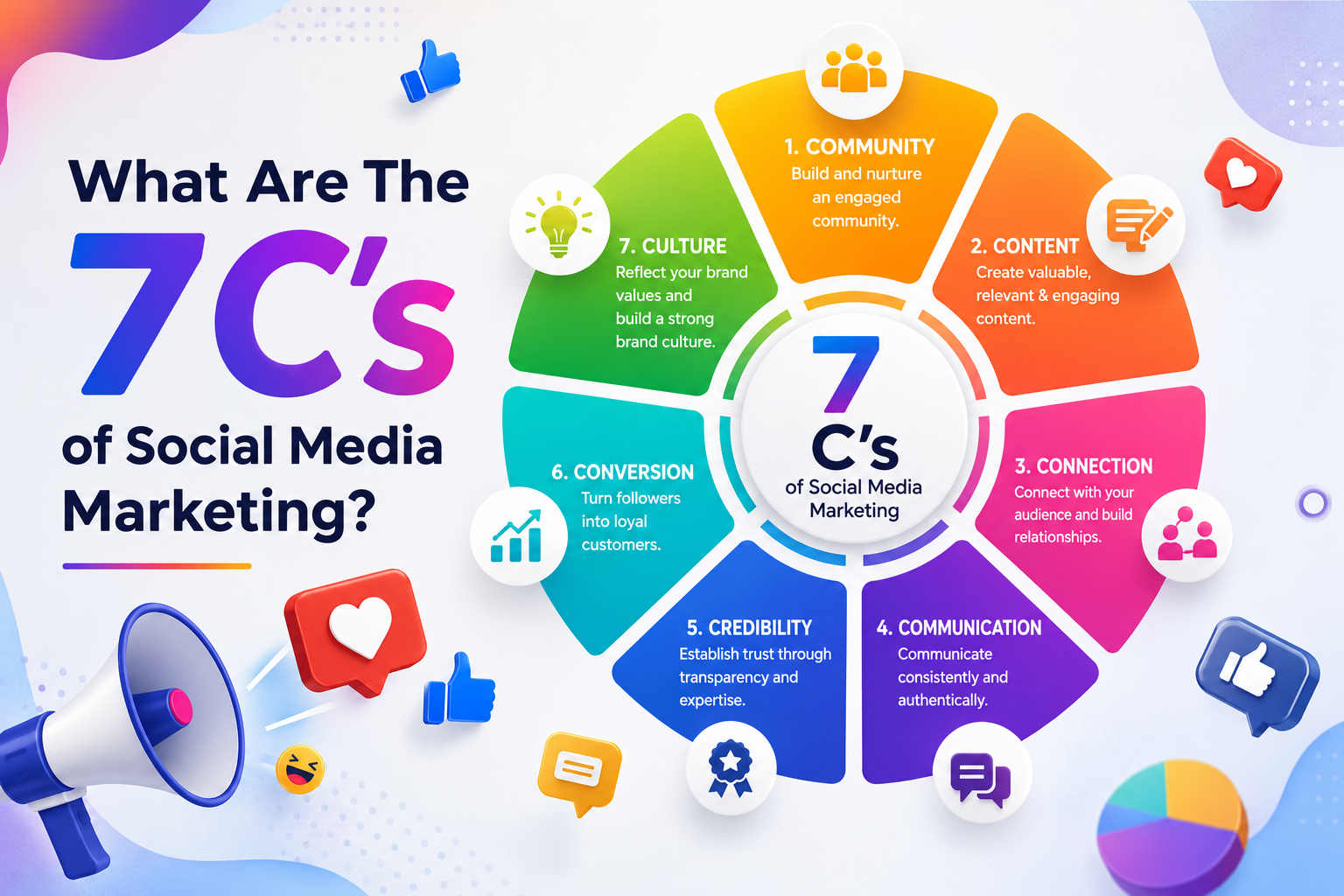
What Are The 7 Cs of Social Media Marketing?
The 7 Cs of Social Media Marketing are Content, Community, Conversation, Connection, Consistency, Credibility, and...
Google Removed FAQ Rich Results, But FAQs Still Help AI Find and Cite Your Website
Short Answer: Yes, FAQs Still Matter More Than Ever Google removed FAQ rich results. A...

How Social Proof and Trust Signals improves Conversion Rate
Social proof and trust signals work. Full stop. Products with just 5 reviews sell 270%...
