Google’s February 2026 Discover Core Update
February 12 , 2026
Google just updated how Discover works with its new Discover Core Update, starting with a rollout that began February 5, 2026. If you rely on Discover traffic, this matters. The platform now prioritizes local content, reduces the visibility of sensational headlines, and rewards publishers who invest in original research and expertise. This update is still rolling out globally, so your experience may vary depending on your location and audience. The core principle is simple: Google is pushing toward content that serves readers rather than content designed to game clicks.
If You Only Do 5 Things This Month, Do These
You don’t need to overhaul everything immediately. Since this update is still rolling out, focus on foundational improvements.
- First, audit your headlines and remove exaggeration where it exists.
- Second, narrow your topic focus to one to three specific areas.
- Third, add original research, case studies, or data to your content.
- Fourth, improve your page experience with faster load times and better mobile design.
- Fifth, monitor your Discover tab in Google Search Console regularly so you can track what’s actually happening with your content.
These five actions align with what Google announced and should improve your positioning regardless of where you are in the rollout.
Important Context: This Update Is Still Rolling Out
Google announced the February 2026 Discover Core Update on February 5, 2026, with an initial focus on English-language content in the United States. The update is expected to expand globally over the coming weeks and months. This matters because if you’re publishing in a different language or region, you may not see impacts immediately. If your primary audience is in the US, you should start monitoring for changes now. Don’t expect instant results. Google’s updates typically take time to fully roll out and stabilize. It’s better to prepare your content now than to react after you see traffic changes.
What You Need to Know About Google Discover (The Quick Version)
Before we dig into what changed, let’s be clear about what we’re talking about. Google Discover isn’t Google Search. It’s that feed that appears in the Google app and on mobile Chrome, the one showing you content based on your interests rather than keywords you typed. It reads your location, watches what you engage with, tracks topics you follow, and learns from your past behavior. Then it surfaces content it thinks you’ll actually click on and spend time with.
Here’s the important part: this update only affects Discover. Your regular search rankings are staying the same. This is its own system running its own rules. The changes announced for February 2026 are specific to Discover, not to how Google Search ranks content.
The Three Core Changes Google Announced in February 2026 Discover Core Update
Google officially outlined three key focus areas for the February 2026 Discover update. Understanding what Google actually said, rather than speculating about what they might have meant, is the best foundation for adapting your strategy.
1. Increased Priority for Local and Regional Relevance
What Google Said
The update prioritizes content that is relevant to a reader’s location and cultural context. Discover now shows more content from regional publishers and local sources rather than purely global content.
Why This Matters
Discover is trying to surface content that actually speaks to where someone is and what’s happening around them. A guide about starting a business in general is less valuable than one specific to a particular country’s regulations, tax system, and business culture. When content is tailored to a region, it demonstrates that the publisher understands that specific market.
How to Think About This
Look at your audience distribution. Where are most of your readers located? If you serve multiple regions, consider whether your content makes sense for all of them or if you should create region-specific versions. This doesn’t mean duplicating content, but rather adapting examples, case studies, and references to match the context where your readers live. A marketing strategist advising clients in the US might need different content than one advising clients in Canada or the UK, simply because the business environment differs.
Where to Start
Examine your best-performing content. Does it include region-specific details? Does it reference regulations, pricing, or market conditions specific to your audience’s location? If not, that’s an opportunity to make your content more locally relevant without completely rewriting it.
2. Reduced Visibility for Clickbait and Sensational Headlines
What Google Said
The update suppresses content with sensational, misleading, or manipulative headlines that don’t accurately represent the article’s content. Google wants headlines that clearly communicate what the reader will actually find in the article.
Why This Matters
Sensational headlines create disappointed clicks. Someone reads “This One Trick Changed Everything” and clicks expecting a revelation, then discovers a mediocre tip they already knew. That disappointing experience trains Google that the content doesn’t deserve visibility. From Google’s perspective, if a headline doesn’t match the content, the publisher is wasting the reader’s time. Honest headlines that accurately describe the content actually perform better because they set the right expectations.
How to Rewrite Your Headlines
Take a headline you’re uncertain about and ask this question: If someone only read the headline, would they have an accurate understanding of what’s in the article? If the answer is no, the headline needs adjustment. Add specificity. Use numbers when you have them. Remove emotional words that don’t add meaning. Instead of “The Marketing Industry Is Being Transformed By AI” write “AI Marketing Tools Now Handle Lead Scoring for 47% of B2B Companies.” The second headline is clearer, more specific, and actually communicates what the reader will learn.
Where to Start
Pick your top ten articles that get Discover traffic. Read each headline and ask if it honestly describes the content. If any feel exaggerated or vague, rewrite them to be clearer and more accurate.
3. Greater Reward for Original Reporting and In-Depth Content
What Google Said
Content that includes original research, unique data, first-hand reporting, or fresh analysis is prioritized over content that repackages existing information. Discover favors publishers who invest in original insights and substantive coverage.
Why This Matters
Discover wants to show readers things they haven’t already seen five times before. If ten publishers are writing about the same news story with slightly different wording, that’s not as valuable as one publisher doing original research on the same topic. Original doesn’t require breaking news. It means showing your own experiments, your own data, your own expert interviews, your own analysis. That’s genuinely new to the reader.
How to Add Original Elements
Start with what you actually know. If you run a business, document a real result from your business. If you use tools professionally, do your own comparison test and share results. If you have expertise in something, interview others in your field and share what they said. Run a small survey and share the results. These activities create genuinely new information that sets your content apart from rewritten summaries of existing articles.
Where to Start
Look at your next five articles you’re planning to write. For each one, ask: What original research, data, or insight can I add here? This might be a customer case study, a tool comparison you’ve actually tested, a survey of your audience, or an interview with an expert. Adding something original doesn’t mean the article has to be twice as long. It means including something readers can’t find elsewhere.
Understanding Discover’s Selection Process
Google’s exact ranking algorithm is always proprietary, but we can understand the principles behind how Discover selects content. When Google evaluates content for Discover, it considers whether the content is relevant to the user’s interests based on their browsing history and followed topics. It also considers location relevance, whether the publisher has expertise in the topic being covered, whether the content quality is high, and whether the user is likely to engage with the content once they land on the page.
This is different from search ranking because Discover isn’t based on keyword matching. It’s based on interest-matching. That distinction is important. Content that doesn’t rank well in search might perform well in Discover if it matches user interests and follows the principles above. Similarly, content that ranks well in search might not appear in Discover if it doesn’t align with user interests.
It’s important to note that Google hasn’t published specific technical details about engagement signals like scroll depth or time on page directly influencing Discover rankings. What we know is that bounce rates and user satisfaction matter, but we shouldn’t speculate about exactly how they’re measured.
Who Is Likely to See Positive Impact
Publishers who have invested in becoming genuine experts in specific topics are well-positioned. A website focused entirely on Shopify conversion optimization will have an advantage over a general ecommerce website. A regional publisher covering local business news will have an advantage in their region. Publishers who create original research, case studies, or data will stand out. Writers who use clear, honest headlines will see better performance. Anyone applying effort toward understanding their specific audience and serving their needs well has a foundation for success.
Who Might Experience Challenges
Publishers who rely on clickbait or sensational headlines will likely see declining visibility. Websites that publish broadly on many different topics without developing deep expertise in any of them may see reduced traffic. Content farms that produce volume over quality will struggle. Sites that primarily rewrite other people’s work without adding original insight will have difficulty gaining traction. Businesses that rely solely on outsourced seo services without building internal subject expertise may also struggle if their content lacks genuine depth. General interest blogs that try to cover every trending topic may not perform as well as focused publications.
How to Monitor Your Own Impact
The best way to understand how this update affects your site is through real-time monitoring. Open Google Search Console and go to the Discover tab. This shows you exactly how many impressions your content is getting in Discover, what your click-through rate is, and which of your pages are actually appearing in the feed. Track these metrics over the coming weeks. You’ll be able to see whether impressions are increasing, decreasing, or staying stable. You’ll see whether your CTR is improving, which would suggest that your content is more relevant to the people who see it. You’ll see which of your articles actually get into Discover, which tells you what type of content the update favors.
Don’t confuse Discover performance with overall SEO performance. You might see your search rankings stay completely stable while your Discover visibility changes significantly. These are separate systems. A decline in Discover doesn’t mean your search optimization is broken.
Practical Steps Based on Google’s Announced Priorities
Step 1: Assess Your Headlines for Accuracy
Go through the articles you’ve published in the last six months. Read each headline and ask whether it accurately describes what’s in the article. Look for headlines that use emotional language, create curiosity gaps, or make promises that the content doesn’t quite deliver. These don’t need to be eliminated entirely, but they should be adjusted to be more straightforward. Add numbers when you have them. Remove words like “shocking,” “unbelievable,” or “game-changing” unless they’re genuinely accurate. The goal is headlines that clearly communicate the article’s value proposition.
Step 2: Define Your Topic Areas More Clearly
Think about what you actually know well. What are the two or three topic areas where you could reasonably claim expertise? These should be specific enough to give you clear boundaries. Instead of “marketing,” pick “B2B SaaS marketing” or “influencer marketing for beauty brands.” This doesn’t mean you can never write about other topics, but it means building a core of deep content around specific areas. Over time, this signals to Google that you’re a genuine authority in those areas rather than someone covering everything.
Step 3: Strengthen Your Content with Original Elements
For your next round of content creation, ask what original contribution you can make. This might be a case study from your own work. It might be a survey of your audience. It might be your own testing of tools or strategies. It might be an interview with an expert. It might be data you’ve collected. The specific form doesn’t matter. What matters is that you’re adding something that readers can’t find elsewhere, based on your own expertise or research.
Step 4: Optimize for Actual Readability
Make sure your content is genuinely readable. Use short paragraphs of two to four sentences. Use clear section headers that help readers navigate. Include visuals where they genuinely help explain something. Make sure your page loads quickly, especially on mobile devices where Discover is primarily viewed. Internal links should connect related articles logically. The goal is that someone reading your content on a mobile device should have a good experience and be able to find what they’re looking for without frustration.
Step 5: Ensure Your Images Meet Discover Standards
Discover displays images prominently in the feed. Make sure you’re using high-resolution images at least 1200 pixels wide. Avoid cramming your articles with stock photos. Use images that actually illustrate something important from the content. Make sure your robots.txt file includes the directive for max-image-preview: large so Google can display your images prominently. Avoid letting your layout get cluttered with ads or pop-ups that distract from the actual content.
Step 6: Monitor Your Search Console Discover Data Actively
Don’t just check Search Console once and forget about it. Make monitoring your Discover tab part of your regular routine, ideally weekly. Track whether your impressions are trending up or down. Watch your click-through rate. Notice which of your articles appear in Discover and which don’t. This real data from your own site is far more valuable than any generic advice, because it tells you exactly how the update is affecting your specific content.
Technical Foundation That Supports Discover Performance
There are technical fundamentals that Discover requires before your content can even be considered. Your site needs to be fully indexed in Google’s main search index, because Discover pulls from the search index. Your site needs to be secure with HTTPS enabled. Your site needs to follow Google’s content policies; if you have manual actions against your site, that blocks Discover access entirely. Your site shouldn’t trigger safe browsing warnings. Your structured data should be accurate and not misused. You shouldn’t have intrusive pop-ups that block content before users can read it. Your mobile experience should be solid, since most Discover traffic comes from mobile. Your site should have healthy Core Web Vitals scores for loading speed, visual stability, and interactivity.
These aren’t unique to Discover, but they’re foundational requirements. If any of these are broken, you’re fighting with one hand tied behind your back.
How This Update Reflects Google’s Broader Direction
This update reflects principles that Google has been emphasizing for some time. Google wants to surface content that demonstrates genuine expertise, authoritativeness, and trustworthiness. These principles, often referred to as E-E-A-T, are central to how Google evaluates content quality. Discover is essentially applying these principles with a focus on user interest and location relevance. The February 2026 update isn’t a dramatic shift in direction. It’s an extension of how Google has been thinking about content quality.
This direction is consistent with what we saw during the Google December 2025 Core Update, where Google reinforced quality, authority, and user-first content across its ranking systems.
The Strategy Shift That Makes Sense
The old approach to content marketing was publishing frequently, covering as many topics as possible, and chasing whatever traffic sources you could get. That approach is becoming less effective. The new approach means being more deliberate about what you publish. It means choosing specific topic areas where you can reasonably claim expertise. It means investing in quality over quantity. It means thinking about the actual value you’re creating for readers rather than the traffic metrics. This isn’t just advice for Discover. It’s good general strategy for building a sustainable publishing business.
Common Patterns to Reconsider
Stop publishing trending news as a reactive measure unless you have genuine expertise or original insight on the topic. Stop writing content primarily to satisfy search algorithms rather than to serve readers. Stop using sensational headlines as your default strategy. Stop neglecting mobile user experience. Stop assuming that copying competitor content and rewriting it will be competitive. Stop measuring success purely in word count. These practices might have worked in previous versions of the algorithm, but they’re becoming less effective.
Real Example: How This Might Work in Practice
Imagine you run a marketing agency and you’ve been publishing blog content across every topic in marketing: social media, email, paid ads, sales funnels, content strategy, analytics, conversion rate optimization. A seasoned marketing strategist would recognize that authority grows faster when content focuses on a clearly defined niche rather than chasing every trending topic. Your traffic was decent, but scattered. Your Discover performance was modest because your expertise wasn’t clear in any one area.
After thinking through this update, you decide to narrow your focus to AI marketing automation specifically. Your agency uses AI tools with clients every day, so you have real expertise here. You start publishing case studies about how you’ve actually used AI tools to solve problems for clients. You run your own tests with new AI features and document the results. You compare AI tools you’ve actually used rather than summarizing other people’s reviews. You interview experts in AI marketing and share their insights. You publish practical guides based on real implementation experience.
Over time, Google recognizes that you’re genuinely authoritative in this specific area. Your Discover visibility increases. Your headline clarity improves because you’re writing about specific tools and techniques rather than trying to be clever. Your click-through rate improves because people who see your content in Discover are actually finding what they’re looking for.
This isn’t guaranteed to happen overnight. Updates roll out over weeks. Your own efforts take time. But the pattern is sound: when you focus on genuine expertise and original insight, you position yourself well for algorithmic favor.
The Real Foundation: Your Expertise and Your Audience
The most important thing isn’t gaming the algorithm. It’s actually being good at something and serving the people who need help with that something. When you focus on becoming genuinely expert in your area, when you invest in original research or original insight, when you write headlines that actually describe your content accurately, you’re not trying to manipulate Discover. You’re creating content that deserves to be seen. The algorithm is just recognizing what’s actually valuable.
What Comes Next
You should monitor your Discover performance over the coming weeks as this update continues rolling out. If you’re in the US or writing in English, you’ll likely see effects sooner. If you’re in another region, the update will reach you over time. Keep your Google Search Console Discover tab open and watch what’s actually happening with your content. Let that real data guide your decisions more than general advice. Adjust your strategy based on what you learn about your specific audience and what content they actually engage with. That combination of principle-based foundation and data-driven adjustment is what positions you for long-term success.
Popular Post
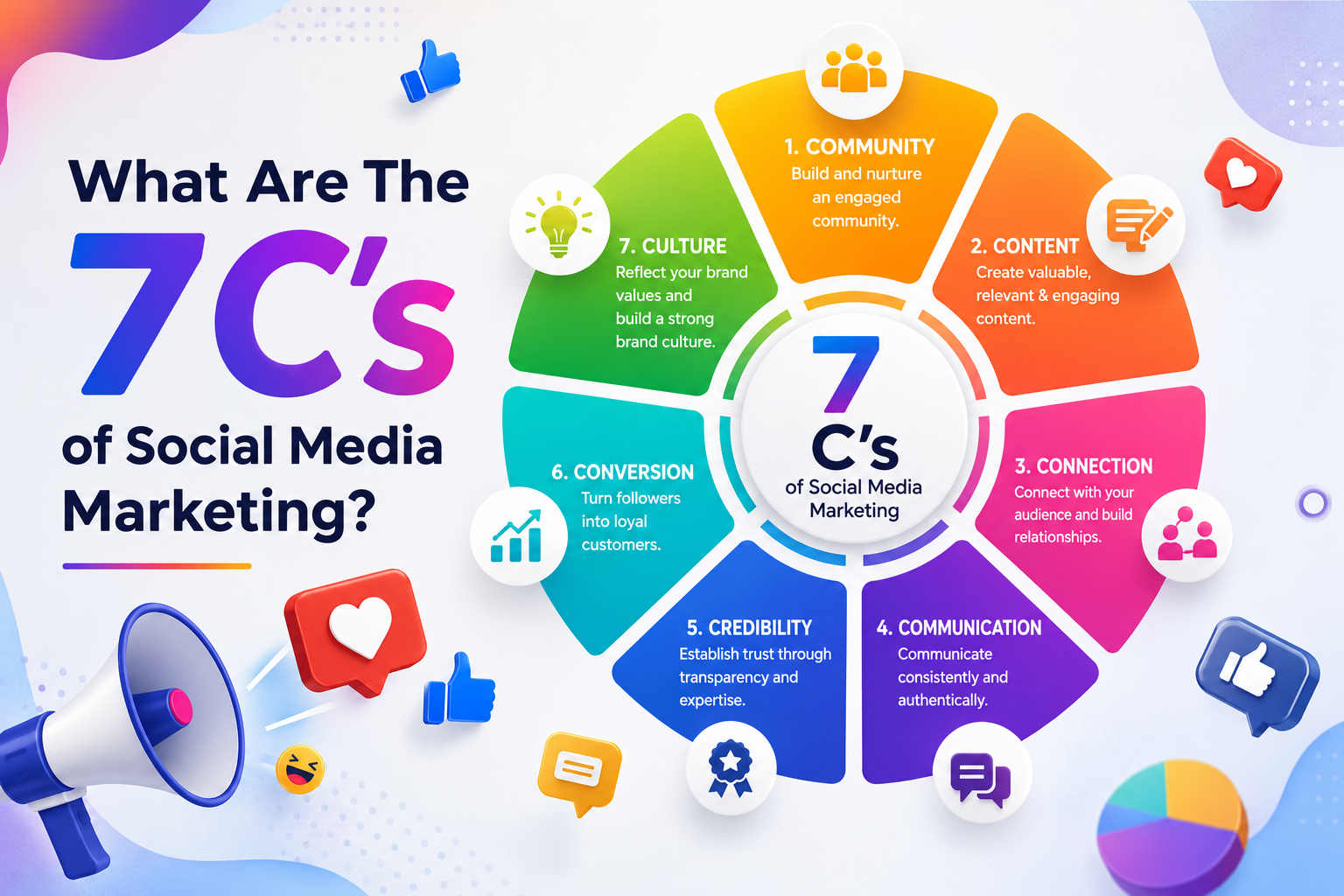
What Are The 7 Cs of Social Media Marketing?
The 7 Cs of Social Media Marketing are Content, Community, Conversation, Connection, Consistency, Credibility, and...

Google Removed FAQ Rich Results, But FAQs Still Help AI Find and Cite Your Website
Short Answer: Yes, FAQs Still Matter More Than Ever Google removed FAQ rich results. A...

How Social Proof and Trust Signals improves Conversion Rate
Social proof and trust signals work. Full stop. Products with just 5 reviews sell 270%...
