Entity SEO Explained: What It Is and Why AI Search Depends on It
December 17 , 2025
The way search works has fundamentally changed. If you’ve been treating SEO like it’s 2015, you’re going to lose.
For years, the game was simple: find keywords, stuff them into pages, and rank. But AI search – the kind ChatGPT uses, the kind Google is building into every result – doesn’t care how many times you say “blue running shoes.” It cares about what you actually are, not just what you talk about.
This shift from keywords to entities is the biggest SEO change nobody’s properly talking about. And if you’re not adapting, you’re already behind.
What Is Entity SEO (Simple Explanation)
An entity, in SEO terms, is a real thing with a stable identity. Your brand. Your product. A person. A place. A concept that exists independently and has defining characteristics.
Think of it this way: Apple is an entity. So is the iPhone 15. So is Steve Jobs. So is Cupertino, California. These aren’t just words you can shuffle around. They’re distinct, recognizable things that have meaning beyond their name.
Examples make this clearer:
- Brand entity: Nike, Coca-Cola, Tesla
- Product entity: MacBook Pro, Tesla Model 3, Beats Studio Pro
- Person entity: Elon Musk, Oprah Winfrey, your CEO
- Location entity: San Francisco, the Eiffel Tower
- Industry entity: Machine learning, sustainable fashion, fintech
Why does Google prefer entities? Because entities are unambiguous. When you search for “apple,” Google doesn’t know if you mean the fruit or the company. But when it understands the context and relationships around that word – your browsing history, the page structure, the linked data – it can figure out which entity you’re actually interested in.
The truth is, keywords alone are weak now. A keyword is just a string of letters. An entity is a whole universe of meaning – attributes, relationships, history, authority. Google wants to serve results based on real understanding, not pattern matching.
How AI Search Understands Content Today
Search engines used to work like this: find the keyword, count it, rank the page.
Now? AI search works more like your brain. It reads for meaning, not keywords.
From keywords to meaning is a massive shift. When you write “the best running shoes for marathons,” Google doesn’t just look for the phrase “best running shoes.” It understands that you’re discussing running shoes, that you care about marathon distance specifically, and that you’re looking for recommendations. It connects this to entities – brands, shoe models, athletes who wear them – to build a complete picture.
This is where the Knowledge Graph comes in. Google’s Knowledge Graph is essentially a massive database of entities and how they relate to each other. It’s been building this for over a decade. Every page you index, every schema tag you add, every mention and citation contributes to Google’s understanding of what entities matter and how they connect.
The Knowledge Graph is how Google knows that Nike, running shoes, and marathon training are all related concepts. It’s how AI search knows not to confuse the Apple corporation with an apple fruit.
Large language models add another layer. They don’t just retrieve facts – they understand nuance and context. An LLM can read ten different pages about your brand and synthesize what it learns into a coherent summary. It can recognize that three different mentions of “the founder” are probably all talking about the same person. It can connect scattered signals across your entire web presence.
And here’s what matters: context beats repetition now. You don’t need to say something five times to rank for it. You need to say it in a way that’s clear, connected, and meaningful. You need to show, not tell.
How Entity SEO Differs From Keyword SEO
If you’re still thinking in keywords, you’re missing the point.
Keyword SEO focus is narrow. It answers: Where does my target phrase appear? How often? Is it in the title tag? In the first hundred words? Keyword SEO is about density, placement, and optimization. It’s mechanical.
Entity SEO focus is different. It asks: What is this page actually about? What entities does it mention? How do they relate to each other? Is this page a clear authority source for this entity? Does it have relationships to other, connected entities?
Old ranking logic worked like this: more keyword matches = higher rank. Modern ranking logic works like this: clear entity authority + proven relationships + structured understanding = higher rank.
An example: Say you sell plant-based protein powder. In keyword SEO, you’d optimize for “vegan protein powder,” “plant-based protein,” “best vegan protein.” You’d cram these phrases into titles and meta descriptions.
In entity SEO, you’d establish your brand as the entity. You’d create clear connections: your brand entity connects to the “plant-based nutrition” entity, the “sustainability” entity, maybe “fitness” or “wellness.” You’d show through internal linking, schema data, and citations that these relationships are real and meaningful.
Why entities scale better: Keywords are limiting. Each keyword is one thing, one phrase, one intent. But an entity is connected to dozens of related queries naturally. When Google understands your brand as a strong entity, it starts ranking you for variations, related searches, and questions you never explicitly optimized for. An entity creates a halo effect.
Why Entity SEO Matters for AI Search Results
AI summaries need facts. Real facts. Specific facts.
When ChatGPT or Google’s AI summary tool generates an answer, it needs to pull from sources it trusts. It doesn’t just scrape keywords. It looks for pages that clearly establish entities and their characteristics. Pages with strong entity signals rank higher in AI summaries because AI models understand them better and trust them more.
Here’s the problem: AI can hallucinate. It can confidently make up information that sounds real but isn’t. One of the best ways to prevent this is to feed the AI model content with clear, structured entities. When your page says, “TechCorp was founded in 2018 by Jane Smith in Portland, Oregon,” and this is backed up by schema data and citations, the AI model can cite this with confidence. It knows where the fact came from. It can verify it’s real.
That’s called reducing hallucinations, and it’s huge. Content with strong entity signals gets cited in AI summaries more often than thin, keyword-focused content.
And there’s a visibility angle too. Ranking in the blue links is just one form of visibility now. You also need to be visible in:
- AI-generated summaries
- Knowledge panels
- Related entity suggestions
- Citation networks
All of these favor clear, well-structured entities.
How Entities Affect AI-Generated Search Summaries
AI systems don’t read the whole internet for every query. They pull from sources that have already been identified as relevant and trustworthy.
AI pulls known entities first. When building a summary, an LLM looks for pages that clearly establish and discuss specific entities. If you’re talking about sustainable fashion, the AI looks for pages that mention real brands, designers, and certifications – not generic content.
Entity relationships matter a lot. Say someone asks, “Which sustainable fashion brands are led by women?” The AI isn’t just looking for pages that say “sustainable fashion” and “women.” It’s looking for pages that clearly establish the relationship: this brand entity has this female leader entity. The relationship is explicit.
When you create these connections through internal linking and schema data, you make it easier for AI to find you and cite you.
Strong entities get cited. When Nike publishes a page about sustainable manufacturing, AI summaries cite Nike because Nike is an established, recognizable entity. When an unknown blog publishes similar content, it doesn’t get cited. Authority comes from entity strength, not just content quality.
This is brutal if you’re not paying attention to it. Weak entities get ignored. If your brand isn’t established as a clear entity, if you don’t have defined relationships to other entities, and if your internal structure doesn’t make these connections obvious, AI search will overlook you even if your content is great.
Types of Entities Google Looks For
Not all entities are equal. Some are more important for ranking than others, depending on your industry.
Brand entities are your starting point. Your company name, your domain, your logo, your values. This is the foundation. Everything else connects back to it.
Google wants to know: Is this a real brand? Does it have consistent identity across the web? Can I find the same brand with the same values and mission on multiple pages? A strong brand entity has a clear About page, founder information, mission statement, and consistent visual identity.
Product or service entities are what you actually sell. Each product is its own entity. MacBook Pro. Tesla Model 3. A tax preparation service. These need individual treatment – their own pages, their own schema markup, their own relationships to related products and categories.
Industry entities are the spaces you operate in. “E-commerce,” “sustainable fashion,” “fintech,” “B2B software.” Showing clear relationship to industry entities helps Google understand your category and context.
Location entities matter more than many realize. Even if you’re not local, your headquarters location is an entity. Your distribution centers are entities. If you operate in multiple regions, each region can be an entity. Location entities help AI understand your physical presence and authority in specific markets.
What Is an Entity Hub (And Why You Need One)
An entity hub is a different way of structuring your content. Instead of random pages scattered across your site, you create a central authority page for a core entity, surrounded by supporting content pages that feed into it.
Think of it like a wheel. The hub is the center. Each spoke is a supporting page. All the spokes connect to the hub. The whole structure is held together by internal entity linking.
Here’s a practical example: Say you’re a running shoe brand. Your brand entity hub is your homepage or an “about Nike running” page. Supporting pages include “Nike running shoe technology,” “Nike marathon shoe reviews,” “Nike running community stories,” “Nike’s sustainable running manufacturing.” Each of these pages mentions Nike and links back to the hub. The hub links out to all of them.
The hub achieves clear topical ownership. When Google crawls your site, it understands immediately: these pages are all about Nike running. Nike is the entity. Everything is connected. You own this topic.
Without an entity hub, your content looks scattered. Each page is optimized in isolation. Google doesn’t see the bigger picture. You don’t benefit from the collective authority of related pages.
Steps to Build an Entity Hub for Your Website
Building an entity hub is straightforward if you follow the process.
Step 1: Identify your core entities. What are you really about? For Apple, core entities include the company itself, but also “innovation,” “design,” “ecosystem,” “sustainability.” For a SaaS company, core entities might be your product, your industry vertical, and your customer type. List them out. Be specific.
Step 2: Create your pillar entity page. This is your hub. It should be comprehensive but not overwhelming. It covers your entity from a high level. It answers: What is this entity? Why does it matter? What defines it? This page should be 1,500–2,500 words of solid, authoritative content. Include your key value props, history, and vision. This is where you plant your flag.
Step 3: Create supporting pages. These are your spokes. Each one digs into a specific angle or related topic. One page might explore “Our Manufacturing Process.” Another covers “Our Sustainability Practices.” A third focuses on “Customer Success Stories.” Each page should be 1,000–1,500 words. These pages are narrower than the hub but still authoritative.
Step 4: Connect with internal links. This is crucial. From every supporting page, link back to your hub at least once – probably in the first 100 words. From your hub, link out to all your supporting pages. Use descriptive anchor text. Don’t just say “read more.” Say “Learn how we approach sustainable manufacturing” with that anchor linking to the relevant page.
Step 5: Add structured data. This is where you tell machines what’s going on. Use schema markup to define your entity, its relationships, and its attributes. We’ll dig into this more in the next section, but the idea is simple: machines need explicit instruction to understand your entity structure.
How to Map Entities to User Search Intent
Entities don’t exist in a vacuum. They exist because people are searching for them, thinking about them, trying to solve problems with them.
Smart entity SEO connects entities to search intent. There are four main types.
Informational intent means people want to learn about something. “What is plant-based protein?” “How does machine learning work?” “Why is sustainable fashion important?” For informational intent, your entity hub should be comprehensive and educational. You’re answering questions, not trying to sell.
Commercial intent means people are researching before they buy. “Best plant-based protein powder for muscle gain.” “Top machine learning courses.” “Sustainable fashion brands.” Here, your supporting pages become crucial. You’re showing why your specific product or service is the answer.
Transactional intent means people are ready to buy. “Buy plant-based protein powder,” “Sign up for machine learning course,” “Shop sustainable fashion online.” These pages need clear calls to action, pricing, and checkout flows. Your entity signals help here by building trust before the transaction.
Navigational intent means people are looking for a specific brand or company. “Nike running,” “Tesla Model 3,” “HubSpot pricing.” These searches have the entity right in them. Your job is to own that entity’s results by being the clearest, most authoritative source.
The trick is this: don’t force one entity into all four intents. Instead, create different supporting pages for different intents, and let them all feed back to your core entity hub. Your hub is the knowledge base. Your supporting pages are positioned along the buyer’s journey.
Structured Data and Entity SEO (Simple Guide)
Structured data is how you talk to machines. Humans read your website and understand that the text “founded in 2015” refers to your company’s founding date. Machines? They need you to be explicit.
This is where structured data comes in. It’s metadata – data about your data. It tells machines exactly what each piece of information means.
Why schema matters: Machines don’t infer. They don’t guess. They need clear labels. Schema markup is that labeling system.
Helps machines understand the difference between a person named “James” and a book titled “James.” The difference between a date that’s when something was founded versus when it was published. The difference between a price and a review rating.
Reduces ambiguity in a major way. Without schema, this sentence is just words: “Sarah Johnson is the CEO of TechCorp, founded in Portland.” With schema, it becomes a structured fact: Entity A (Sarah Johnson) holds Role B (CEO) at Entity C (TechCorp), which was Founded D (in Portland). Machines can now verify this, compare it across sources, and build a clearer picture.
Improves trust because machines can trace the information back to your structured data. If you say you won an award and back it up with schema markup, that’s verifiable. It’s harder to game.
Which Schema Types Are Most Important for Entity SEO
Not all schema tags are created equal. Some directly impact entity recognition and ranking. Focus on these.
Organization schema is your foundation. It tells the world what your company is. Name, logo, contact information, location, social profiles, founding date, key people. If you’re not using Organization schema, you’re missing a huge opportunity. This one schema type helps Google understand the basic facts about your entity.
Product schema is essential if you sell physical or digital products. It includes product name, description, price, availability, reviews, images. Each distinct product should have its own Product schema. This helps Google display your products in rich results and understand them as separate entities.
Service schema is for agencies and service businesses. It describes what service you offer, who provides it, pricing, and availability. Instead of one Product schema, you might have multiple Service schemas – one for consulting, one for training, etc.
Person schema is critical if you’re a personal brand or if key people matter to your entity story. It includes name, bio, social profiles, and affiliations. Many B2B companies miss this – but if your founder is known in the industry, Person schema for that founder strengthens your entire brand entity.
FAQ schema doesn’t define your entity directly, but it signals authority and expertise. When Google sees structured FAQ content, it understands you’re answering real questions people have. This builds entity authority indirectly.
Use all of these that apply to your business. Don’t just slap schema on pages and forget it. Make sure the data is accurate and comprehensive.
Which Structured Data Types Help Entity Recognition
Beyond the main schema types, there are specific tags that help machines recognize and connect entities.
SameAs markup is underrated. It tells machines, “This entity on my website is the same as this entity on other trusted platforms.” You use it to link your brand on Wikipedia, your company LinkedIn page, your Crunchbase profile, your Twitter handle. When you link yourself to the same entity across multiple platforms, you strengthen that entity’s identity in the Knowledge Graph.
About and mentions tags tell machines what your page is primarily about versus what it merely discusses. A page can be “about” Nike running shoes but also “mention” Adidas and New Balance for comparison. Machines should weight the “about” entity more heavily than the “mentions” entities.
Entity relationships are where things get interesting. Schema allows you to express that Person A founded Company B, that Product X is made by Brand Y, that Location Z is where Service Q is headquartered. These relationships are how machines build a complete entity picture.
Location properties matter beyond just “where you’re based.” You can mark up your headquarters, your distribution centers, your retail locations. You can also mark up entities that have location significance – for example, Coca-Cola’s birthplace (Atlanta) is part of the Coca-Cola entity story.
How to Audit Existing Content for Entity Signals
Most websites are weak on entity signals. They’ve been optimized for keywords for so long that the entity structure is invisible.
An audit looks for gaps.
Missing entities: Are you talking about related concepts without explicitly connecting them through internal links? For example, a post about “sustainable manufacturing” that never links to your sustainability hub or your company’s environmental policy page. The entities are implied but not connected.
Weak entity context: Your page mentions an entity but doesn’t explain what it is or why it matters. For example, a page that says “We use the AWS platform” without explaining what AWS is or why it’s important to your business. From a machine’s perspective, that’s weak – it doesn’t establish relationship clarity.
No internal linking: Related pages don’t link to each other. A blog post about your product doesn’t link to your product hub. A case study doesn’t link to the relevant service page. The content exists, but it’s isolated.
No schema usage: You’re not using any structured data at all. Or you’re using it inconsistently – some pages have Organization schema, others don’t. Machines have to guess at what’s important.
If any of these apply to your site, you’ve found your optimization opportunities.
Steps to Perform an Entity Audit for a Website
A proper entity audit takes time, but it’s not complicated. Here’s the process.
Step 1: Content inventory. List every page on your site. Categorize them: is it a hub page? A supporting page? A blog post? A product page? Getting a bird’s-eye view of your content structure is step one.
Step 2: Entity extraction. For each page, identify the main entity (what it’s about) and secondary entities (what it mentions). Use tools if you have them – Google’s NLP API, InLinks, Ahrefs’ entity signals. Or do it manually if your site is small. The goal is to build a map of which entities appear on which pages.
Step 3: Entity gaps analysis. Look for obvious missing connections. Should your product pages link to your brand hub? Should your blog posts about industry trends link to your service pages? Where is the entity structure broken?
Step 4: Schema validation. Check which pages have schema and which don’t. Use Google’s Rich Results Test to validate your markup. Look for errors or missing fields. Are your Organization and Product schemas complete?
Step 5: Internal link review. Map your internal linking. Does it make sense from an entity perspective? Or does it feel random? Are you linking to relevant entities or just anywhere?
Tools to Extract and Analyze Entities From Content
You don’t have to do this manually. Several tools make entity analysis easier.
Google NLP API is free (up to a point). It identifies entities in text automatically and tags them with their semantic type. Feed it a page, and it tells you what entities are present. It’s not perfect, but it’s a solid starting point.
InLinks is built specifically for entity SEO. It analyzes your content, identifies entities, shows you gaps in entity coverage, and recommends internal linking opportunities. It’s probably the best tool if you’re serious about this.
Ahrefs entity signals show you how your entities compare to competitors. It helps you understand which entities your competitors are ranking for and where you’re weak.
Screaming Frog is a technical SEO crawler, but it has entity analysis built in now. It crawls your site and identifies schema markup, internal linking, and entity mentions.
Knowledge Graph tools like Google’s Knowledge Graph Search API let you query entities directly. They show you what Google knows about a given entity and how it’s structured.
How to Measure Entity SEO Impact
So you’ve built your entity hubs, added schema, fixed your internal linking. How do you know it’s working?
Traffic quality matters more than raw traffic. Are people landing on your hub pages and then exploring related content? Or are they bouncing? Track pages per session and time on site by page type. Stronger entity signals should lead to more engaged visitors who explore your content more deeply.
AI search visibility is trackable now. Monitor whether your brand appears in AI summaries on Google, ChatGPT, or other platforms. Use tools like Brand24 or Mention to track where your brand is cited. Are you appearing in more AI summaries than before?
Conversion lift should be measurable. Are entity-hub-related pages converting better than before the optimization? Are customers spending more time on your site? Compare conversion rates before and after your entity SEO work.
Assisted conversions show you how often entity hub pages or supporting pages contributed to a conversion even if they weren’t the final touch. In Google Analytics, look at assisted conversions to understand the role of your entity structure in the customer journey.
The truth is, the impact isn’t always immediate. Entity SEO is a long-term game. But after three to six months, you should see signals that the changes are working. These metrics matter only if your technical SEO checklist to rank in AI is properly implemented.
Common Entity SEO Mistakes Businesses Make
These are the patterns I see repeatedly. Avoid them.
Overusing keywords while ignoring entity structure. You’ve optimized for “machine learning for business” but never explained what machine learning is or how it relates to your services. The keyword is there, but the entity is weak.
Ignoring schema because it “seems technical.” Schema isn’t optional. It’s how modern AI systems understand your content. If you’re not using it, you’re at a massive disadvantage.
No entity consistency across pages. Your homepage calls you “ABC Corp.” Your blog says “ABC Corporation.” Your social profiles say “ABC Co.” Machines see these as different entities. Consistency matters hugely.
Thin authority pages. Your hub page is 300 words. Your supporting pages barely scratch the surface. Authority comes from depth and comprehensiveness. These pages need to be meaty.
Not thinking about entity relationships. You talk about your product and your customer types separately. You never connect them. A customer type is an entity. Your product is an entity. The relationship between them is what matters.
Entity SEO Checklist for Business Owners
If you want to know where to start, use this checklist. It’s concrete and actionable. As a technical SEO expert, I’d recommend tackling items in this order for maximum impact.
[ ] Clear brand entity defined. You have an About page that clearly explains what your brand is, your history, your values, and your vision.
[ ] Entity hub created. You have a central “pillar” page for your main offering or brand. It’s comprehensive (1,500+ words). It links to supporting pages.
[ ] Supporting entity pages created. You have 3–5 supporting pages that explore specific angles of your main entity. Each links back to the hub.
[ ] Organization schema implemented. Your homepage has proper Organization schema with name, logo, contact info, social profiles, and founding date.
[ ] Product/Service schema added. Each product or service page has appropriate schema markup with details like name, description, price, and availability.
[ ] Internal linking structure cleaned up. Related pages link to each other intelligently. Hubs link to supporting pages. Supporting pages link back.
[ ] SameAs markup added. Your brand’s Wikipedia, LinkedIn, Crunchbase, and other verified profiles are linked via SameAs in your schema.
[ ] FAQ schema considered. If applicable, you’ve added FAQ schema to pages that answer common questions.
[ ] Content aligned with entities. You’re writing about entities, not just keywords. You explain what entities are and how they relate.
[ ] Results tracked. You’re monitoring traffic quality, AI search visibility, and conversions monthly. You have a baseline to measure against.
This checklist isn’t just nice-to-have. As you work to rank in ChatGPT and other AI search systems, following these steps becomes non-negotiable.
Final Thoughts: Entity SEO Is Not Optional
AI search is here. It’s not coming. It’s already integrated into Google, it’s on ChatGPT, it’s in Perplexity, it’s embedded in assistants. The way people find information is shifting in real time.
Entities power trust. When AI systems cite your content, they do it because they understand you as a clear, authoritative entity. Keywords alone don’t build that trust. But a well-structured entity – with supporting content, schema markup, internal links, and relationships – absolutely does.
Early movers win in shifts like this. The companies that start building entity SEO now will dominate AI search results in two years. The companies that wait? They’ll be playing catch-up.
And here’s the hard truth: keywords alone will fail. Not immediately. But it’s coming. Google’s own research shows they’re moving away from simple keyword matching toward entity and meaning understanding. If your whole SEO strategy is built on keyword optimization, you’re betting on a dying model.
Start today. Identify your core entities. Build your hub. Connect your content. Add schema. Track the results.
Your future rankings depend on it.
Popular Post
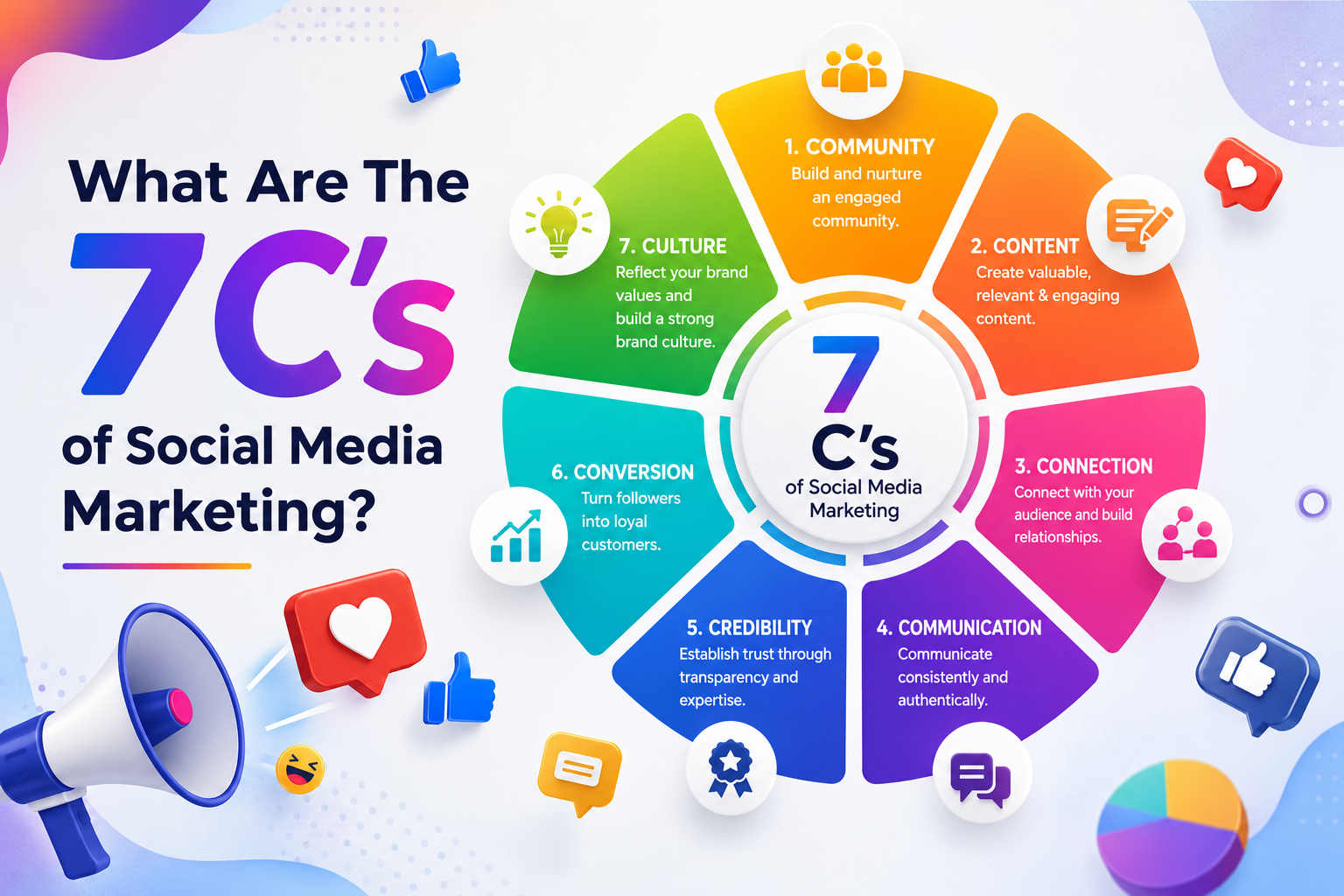
What Are The 7 Cs of Social Media Marketing?
The 7 Cs of Social Media Marketing are Content, Community, Conversation, Connection, Consistency, Credibility, and...
Google Removed FAQ Rich Results, But FAQs Still Help AI Find and Cite Your Website
Short Answer: Yes, FAQs Still Matter More Than Ever Google removed FAQ rich results. A...

How Social Proof and Trust Signals improves Conversion Rate
Social proof and trust signals work. Full stop. Products with just 5 reviews sell 270%...
